The Main Difference
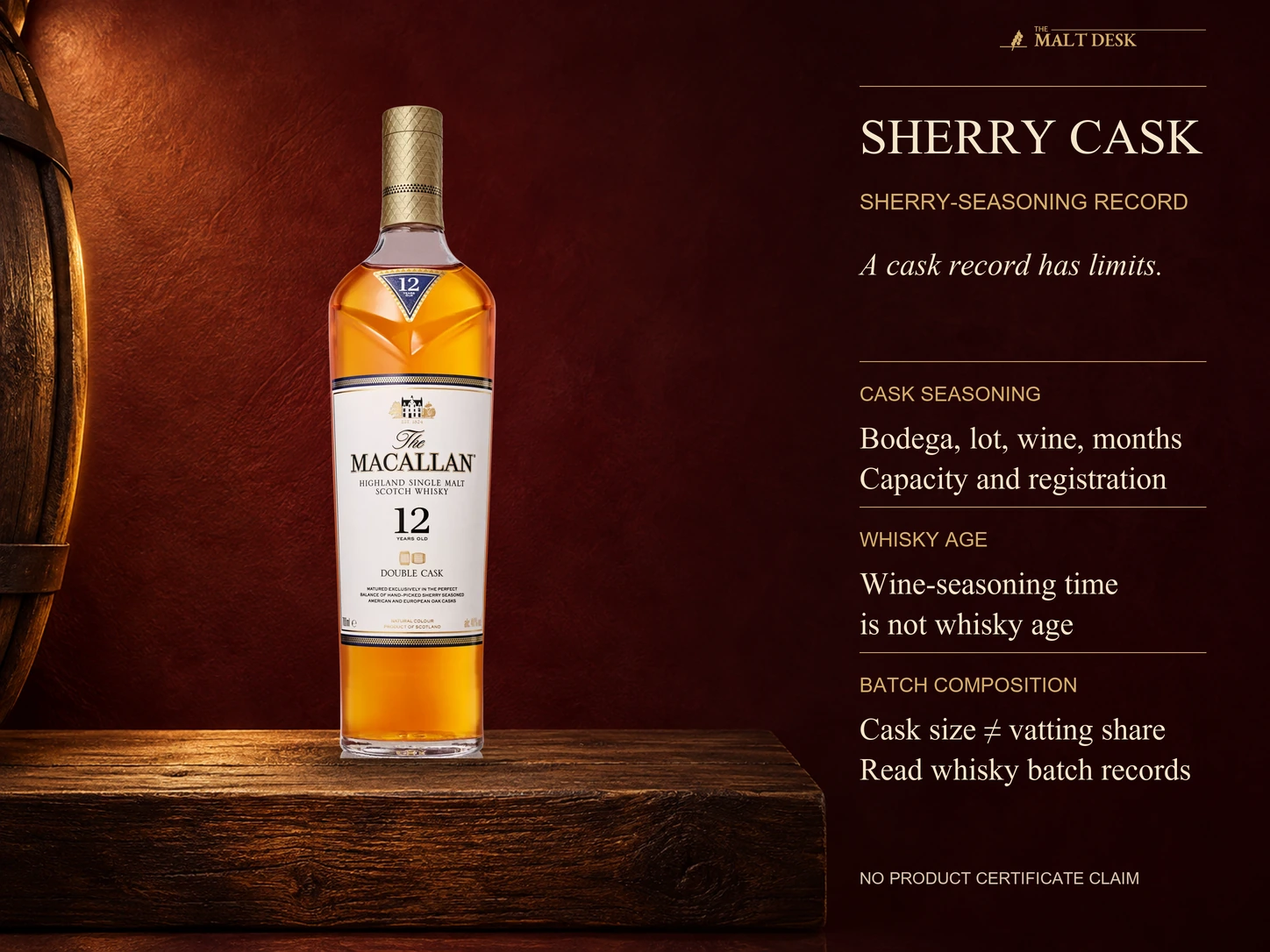
“Sherry cask” can describe a maturation history, but the Consejo Regulador also operates a specific Sherry Cask certification system. Its guarantee label is attached to the individual cask and traces seasoning information. That gives the reader a more concrete question than whether the whisky looks dark: what wine and seasoning history are documented for the cask?
The certification concerns the cask’s preparation, rather than a taste grade for every whisky later held in it. Even genuine, traceable sherry seasoning cannot by itself establish the whisky’s age, the percentage of a final vatting drawn from those casks or how much sherry-associated aroma will be perceived.
Bourbon-cask and sherry-cask labels describe cask history. Flavor descriptions commonly associate ex-bourbon maturation with vanilla and fresh fruit, and sherry-seasoned maturation with dried fruit and spice. The species of oak, the type of sherry seasoning, first fill versus refill, and full maturation versus finishing can change the result dramatically.
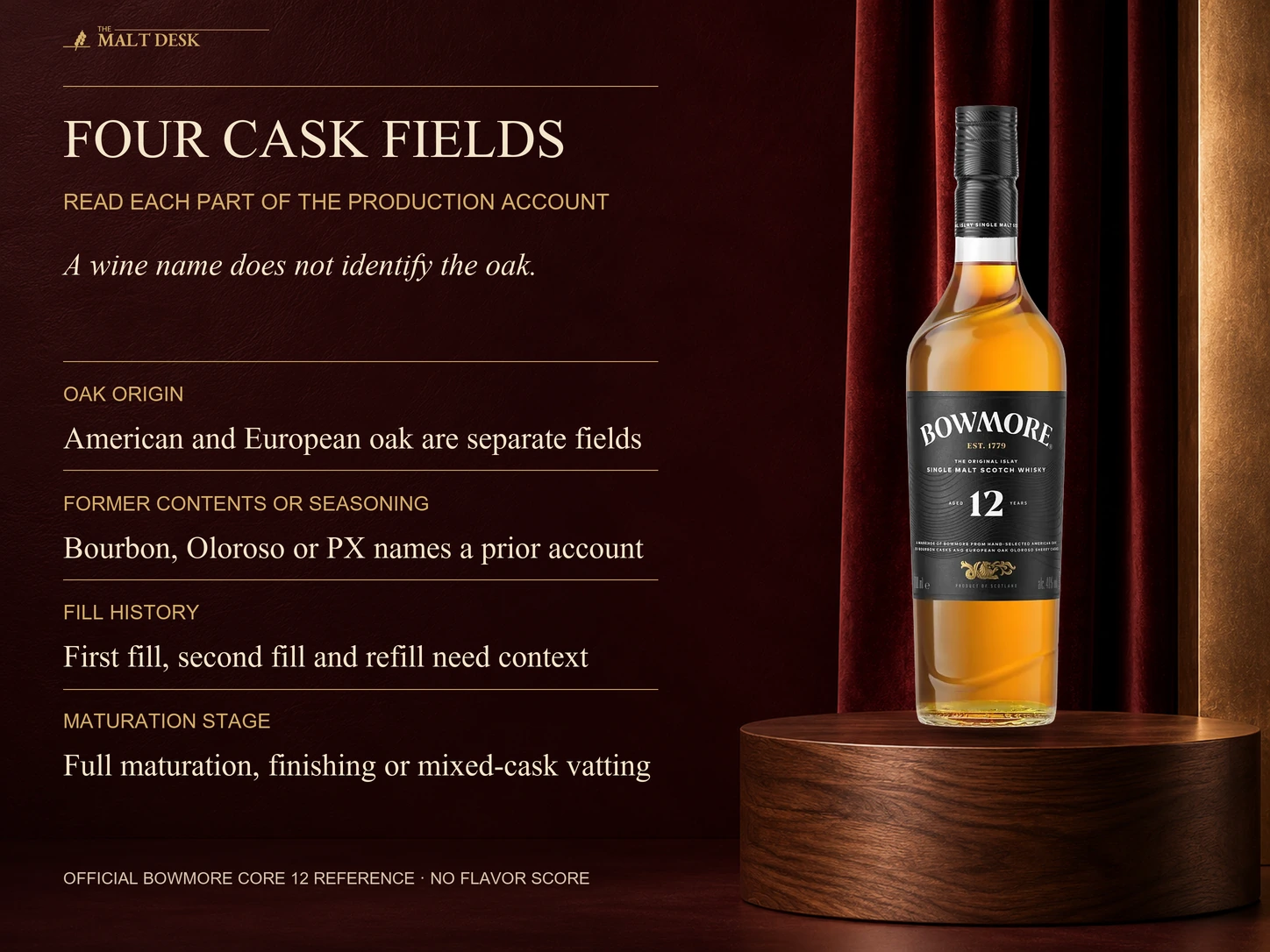
Read oak origin, former contents, fill history and maturation stage as separate fields. American oak can be sherry-seasoned, and a former bourbon cask can be used again for Scotch. A cask name does not reveal component proportions, wood activity or an exact flavor intensity in the finished bottle.
Key Takeaways
- Former bourbon and named sherry describe previous cask contents or seasoning, not a complete recipe.
- Oak origin is a separate field: sherry-seasoned does not necessarily mean European oak.
- In common Scotch usage, first fill follows previous non-Scotch contents; refill indicates previous Scotch use. Producers may separately identify second fill.
- First fill is not a synonym for unused or virgin oak.
- Full maturation and finishing describe the stage in which a cask is used.
- A mixed-cask vatting can combine components matured separately; undisclosed proportions remain unknown.
- Color alone cannot establish cask history or flavor intensity.
- Compare attributed product notes separately from the production specification.
What Does “Bourbon Cask” Mean?
In Scotch whisky, “bourbon cask” usually means an American oak barrel that previously matured bourbon. After its use for bourbon, the barrel may be reused for Scotch maturation. Barrels may also be dismantled and their staves reassembled into larger hogsheads.
Common descriptive associations include vanilla, coconut, and fresh fruit, but the cask label alone cannot establish their intensity in an individual whisky. It describes the cask’s previous use and the style of oak influence it is likely to add.
The wider category distinction is explained in Types of Whiskey, which separates Scotch production rules from American bourbon rules.
What Does “Sherry Cask” Mean?
Most modern sherry-cask Scotch is matured in oak that was seasoned with sherry for the whisky industry. The sherry type, seasoning period, oak species, cask size and fill history all shape the result. The phrase does not guarantee an old transport cask, and it does not identify one universal flavor.
Oloroso
Oloroso identifies the sherry associated with the cask. It does not specify oak origin, seasoning time, fill count or how much of the final vatting came from that cask. Those missing fields matter when comparing producer descriptions; the wine name alone does not establish a dry or nutty whisky profile.
Pedro Ximénez
Pedro Ximénez, often abbreviated PX, identifies another named sherry used in cask descriptions. It does not quantify residual compounds, the proportion of the whisky matured in those casks or sweetness in the finished product. Read any raisin, treacle or other flavor terms as an attributed description of the particular bottling.
A familiar reference point is the Macallan 12 Double Cask guide, where American- and European-oak sherry-seasoned casks are used together rather than treated as one undifferentiated “sherry” category.
What Cask Wording Actually Tells You
Flavor vocabulary is useful for organizing descriptions. Distillery character, peat, age, oak species, and the final vatting can change the profile. Compare the stated cask history and attributed descriptions rather than treating a numerical flavor score as a measured property.
Use the Whiskey Flavor Map to separate fresh fruit, dried fruit, oak spice and sweetness instead of reducing the comparison to “light” and “rich.”
Worked Example: A Hypothetical Cask Description
Consider the hypothetical phrase “Oloroso sherry finish.” This is a label-reading illustration, not a quotation from a particular bottle. It identifies the sherry associated with a finishing cask and a secondary maturation stage. It leaves several other details open.
| Question | What the phrase establishes | What remains unstated |
|---|---|---|
| Previous contents | Oloroso sherry association | Seasoning duration and cask history |
| Maturation stage | A finish after primary maturation | Primary cask type and finishing time |
| Oak | No species specified | American or European oak |
| Fill history | No fill count specified | First fill or refill |
Read the producer’s fuller explanation before filling those gaps. The phrase alone cannot establish the entire maturation recipe or a numerical flavor intensity.
First Fill, Refill, Full Maturation and Finishing
First Fill
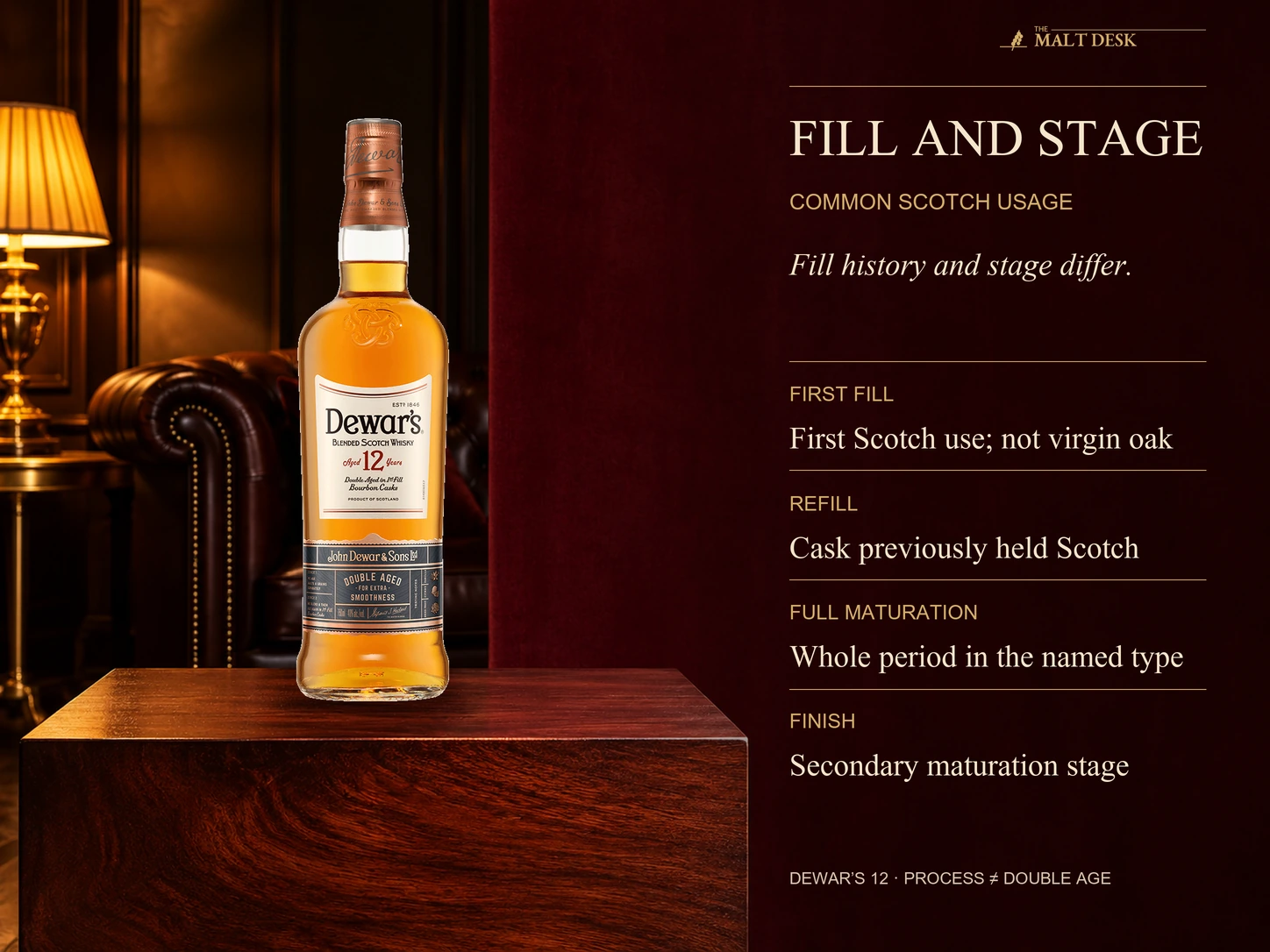
In common Scotch usage, first fill means the cask’s first Scotch use after previous contents such as bourbon or sherry. It does not mean unused wood. Ask for oak origin, previous contents and time as well.
Refill
Refill indicates that the cask has previously held Scotch. Some producers distinguish second fill from later refills, so consult their own explanation before assigning a precise fill count. Earlier use and its duration affect the cask.
Full Maturation
Full maturation in a stated cask type describes the entire maturation period in that type. A mixed-cask vatting may combine whiskies matured separately in different casks. It should not be described as full maturation in every cask type unless the producer’s explanation supports that wording.
Cask Finish
A finish is a secondary maturation period after a primary cask stage. The finishing-cask name does not reveal the base cask or the time in each stage unless the producer supplies them. Finishing extends maturation; it is not a statement that whisky spent its full age in the final cask.
| Term | What it establishes | Details still needed |
|---|---|---|
| First fill | First Scotch use after previous contents | Oak, former contents, previous history and time |
| Refill | Previous Scotch use | Exact fill count and duration of earlier use |
| Full maturation | Entire maturation in the named cask type | Component histories if combined in a vatting |
| Finish | Secondary maturation after a primary stage | Primary cask and time in both stages |
Cask Traceability and Whisky Composition Are Different Records
The Consejo Regulador explains that its registered Sherry Cask mark, introduced in 2015, is supported by a technical seasoning specification and OECCA certification. The attached guarantee card carries an individual cask registration number and a certification number. Its QR record includes the seasoning lot, cask capacity, certified bodega, minimum seasoning duration in months and the wine type where applicable. These are specific traceability fields rather than a generic promise of rich flavor.
| Cask certification information | Useful question it addresses | Finished-whisky information it does not supply by itself |
|---|---|---|
| Certified bodega and seasoning lot | Who seasoned the cask and which lot it belongs to | Which distillery supplied the whisky |
| Wine type and seasoning duration | The documented wine-seasoning account | Whisky maturation age or finishing duration |
| Cask capacity and individual registration | Which physical cask and capacity are identified | Its percentage in the bottled vatting |
| Certification under the seasoning specification | Whether the documented seasoning meets that system | A measured sweetness, smoke level or quality score |
In a hypothetical record, eighteen months of wine seasoning followed by twelve years of whisky maturation would not make the whisky thirteen-and-a-half years old. The wine and the whisky occupied the cask at different stages. Nor would a card naming a 500-liter cask mean that a final 700 ml bottle contains a known share from it; the producer could vat multiple casks. The whisky batch record is needed to connect the individual cask evidence to the finished expression.
The SWA requires eligible maturation and finishing casks to be emptied of their previous contents before filling with Scotch or spirit destined to become Scotch. Equally, a consumer-facing bottle page that does not display a cask’s card cannot by that omission alone establish failed seasoning certification. Keep documented traceability, missing public records and whisky composition as distinct findings.
American Oak vs European Oak
American oak and European oak describe wood origin, while Oloroso or PX describes a seasoning wine. A sherry-cask specification can therefore include either oak origin. These fields can inform a producer’s flavor explanation.
Time and previous use belong in the cask record alongside wood origin and seasoning. A longer age does not establish a better flavor, and a more expensive first-fill bottling does not prove greater balance than a refill bottling. Compare specific production disclosures and attributed tasting evidence rather than an assumed price-to-flavor relationship.
The tension between distillery identity and cask influence is one reason the Single Malt vs Blended Scotch guide is useful: cask type is only one layer of how a whisky is constructed.
Common Myths
Sherry Cask Always Means Sweet
No. The label identifies cask history. Named wine, oak origin, fill history, spirit and the final vatting are separate factors. Use the producer’s notes for that expression rather than predicting a preference from the cask family.
Darker Color Means More Sherry
Color can come from active oak, longer maturation, cask type, vatting decisions or permitted caramel coloring. A dark whisky may be intensely cask-driven, but the shade alone cannot prove how it was matured.
Bourbon Cask Means Simple
A producer may describe fruit, malt or oak notes in a particular bottling, but those words require attribution. Compare the full product description rather than assuming one cask history makes whisky simple.
Sherry Cask Is Automatically Premium
The production and seasoning process can affect cask cost. Assess the specificity of the production information and any attributed tasting evidence rather than treating a cask name as a premium quality grade.
How to Read a Cask Description
| Wording | Field identified | Questions to ask |
|---|---|---|
| Bourbon cask | Previous bourbon use | Oak origin, fill history, full maturation or finish? |
| Oloroso cask | Named sherry association | Oak origin, seasoning history and stage? |
| PX cask | Named sherry association | Duration, stage and component share disclosed? |
| Mixed-cask recipe | More than one cask input | Which components, separate maturation or sequence, and disclosed shares? |
Beginners who are still identifying their preferred direction can use Best Whiskeys for Beginners as a broader starting point rather than buying solely from a cask label.
Serving the Two Styles
Neat, water-added, and ice-cooled servings differ in concentration and temperature. These conditions can change perceived aroma and texture, but no serving method reliably reveals a predetermined set of notes.
How to Drink Whiskey explains how neat pours, water and ice change aroma, texture and perceived sweetness.
What the Comparison Establishes
Bourbon and sherry cask descriptions identify different maturation histories. They may help explain commonly reported flavor vocabulary.
The useful questions are factual: which oak, what previous contents, first fill or refill, and full maturation or a finish? When those details are missing, the label leaves an uncertainty.
Ask for the Cask Record That Answers Your Question
For a sherry-seasoning question, examine the stated wine, seasoning history and any relevant cask certification. For the whisky’s maturation question, read its own cask sequence, duration and finishing account. Compare oak origin separately. This lets the reader choose a cask style on the evidence relevant to the desired production feature.
Frequently Asked Questions
Is sherry cask whisky sweeter than bourbon cask whisky?
A named sherry or previous bourbon use is a production field, while sweetness is a sensory description requiring evidence for the particular bottling and comparison conditions.
Does bourbon cask whisky contain bourbon?
The cask previously held bourbon; Scotch is a separately produced spirit. Scotch maturation and finishing casks must be emptied of their previous contents. A former-bourbon description does not mean bourbon was poured into the Scotch.
Is first fill better than refill?
It records previous use. Exact cask condition, earlier duration and the producer’s blending choices are not disclosed by first fill or refill alone.
Is a sherry finish the same as sherry-cask maturation?
Finishing is a secondary part of maturation after a primary cask stage. Full maturation in sherry casks is a different history. Ask where each component matured and for how long.
Can color tell me which cask was used?
Not reliably. Cask activity, age, vatting and permitted caramel coloring can all affect appearance.
Sources
Scotch Whisky Association allowable-cask guidance and FAQs, rechecked October 4, 2026 for permitted previous use, emptied casks and finishing; Bruichladdich’s All about Casks account, checked October 4 for first fill, second fill and refill terminology. Consejo Regulador Sherry Cask history and seasoning material was checked October 3.
Additional traceability sources: Consejo Regulador’s Sherry Cask certification and guarantee-label explanation and SWA allowable-cask guidance, checked October 7, 2026. The eighteen-month seasoning and 500-liter examples are hypothetical. Cask certification is not presented as a finished-whisky sensory grade, a public certificate for any named bottle or a disclosure of vatting percentages.