Skip to content

The Malt Desk by K. Choi

  • Whiskey Profiles
    • Tennessee Whiskey
    • Peated Whiskey
    • Japanese Whiskey
    • Irish Whiskey
    • Bourbon whiskey
    • Blended Scotch Whiskey
    • Single Malt Scotch
  • Whiskey Comparisons
  • Whiskey 101
  • Gear & Glassware
  • Explore Whiskey

Whiskey 101

Browse Whiskey 101

  • How to Store Whiskey: Light, Temperature, Closures and Open Bottles
  • Bourbon vs Rye Whiskey: Grain Rules, Labels and Flavor Differences
  • What Is Japanese Whisky? Origin Standards, Labels and Production Styles
  • Single Pot Still Irish Whiskey Explained: Rules, Flavor and Bottles
  • Whiskey Flavor Maps Explained: Aroma Families and Their Limits
  • What Is Peated Whisky? Smoke, PPM and Flavor Explained
  • Single Malt vs Blended Scotch: Which Is Better?
  • How to Drink Whiskey: Neat, Water, Ice or Highball?
  • Types of Whiskey Explained: Scotch, Bourbon, Irish, Tennessee & Japanese

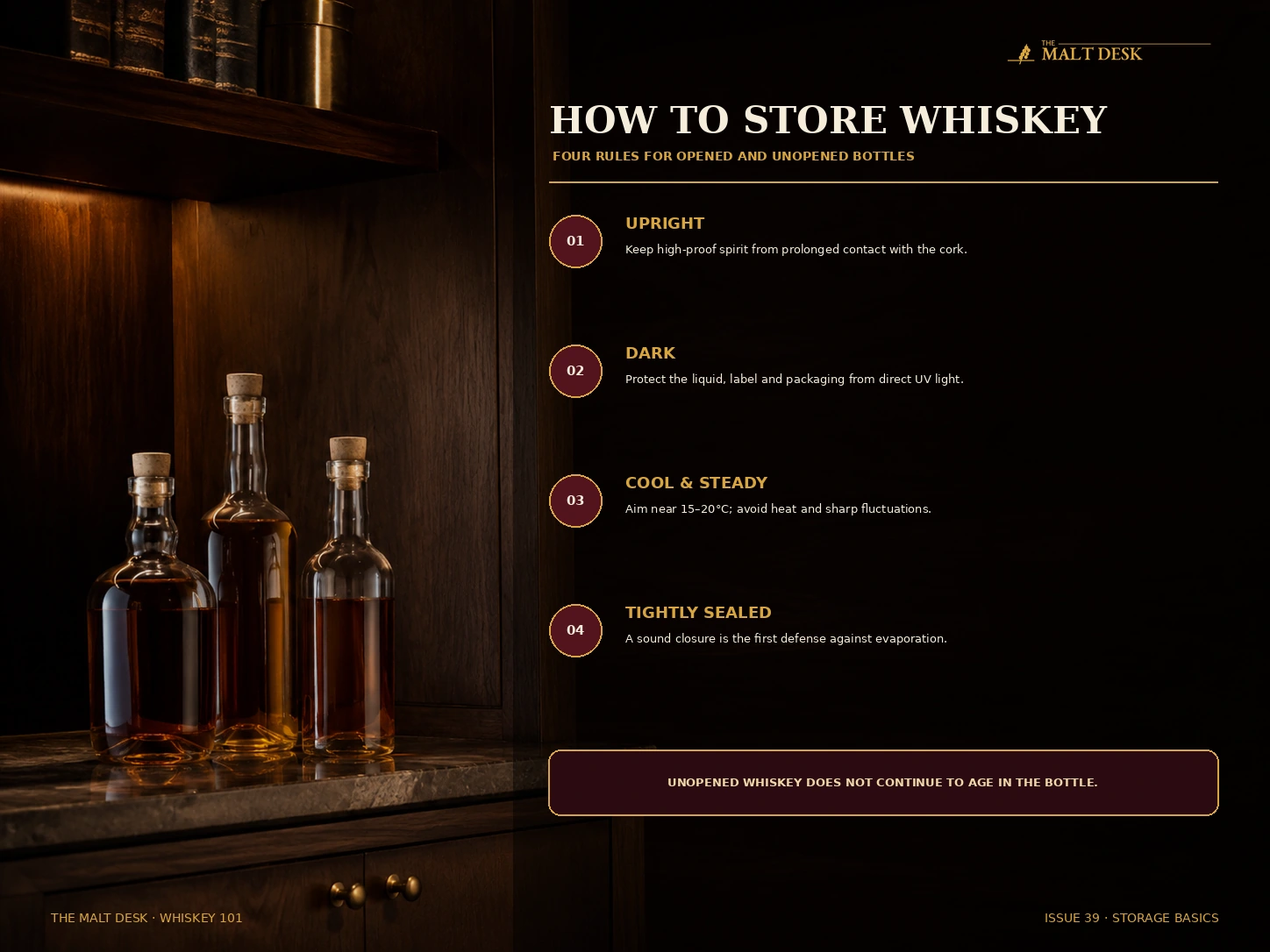
How to Store Whiskey: Light, Temperature, Closures and Open Bottles

September 9, 2026August 24, 2026 by K. Choi
How to store whiskey upright in a dark cabinet at a cool stable temperature with a tight seal

Whiskey storage explained: upright bottles, protection from light and heat, reliable closures, headspace and practical care after opening.
Categories Whiskey 101 Tags Bottle Storage, Cork Care, Opened Whiskey, Unopened Whiskey, Whiskey Cabinet, Whiskey Decanter, Whiskey Storage, Whisky Oxidation Leave a comment

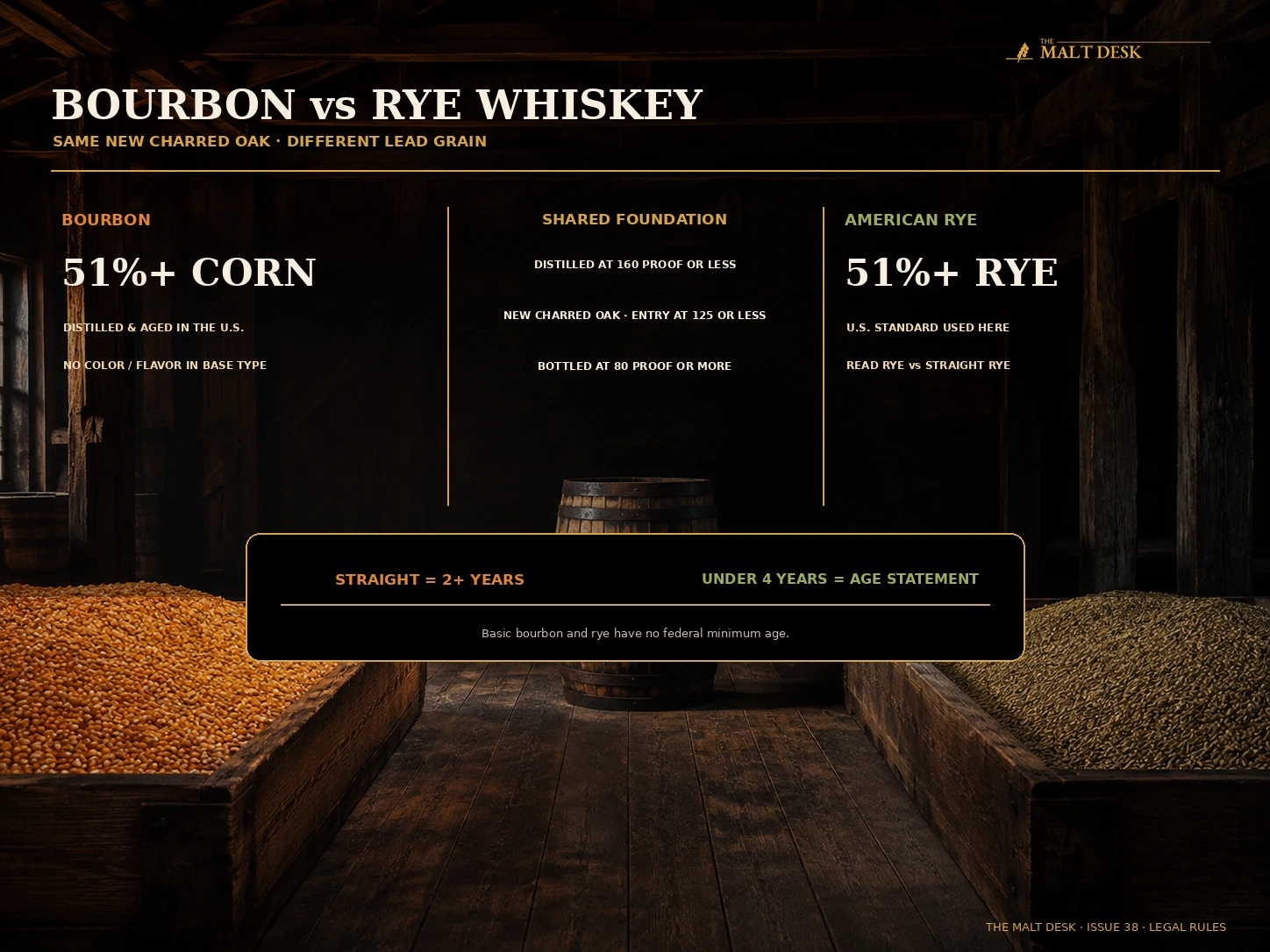
Bourbon vs Rye Whiskey: Grain Rules, Labels and Flavor Differences

September 9, 2026August 23, 2026 by K. Choi
Bourbon vs rye whiskey legal comparison showing 51 percent corn versus 51 percent rye and their shared new charred oak rules

Bourbon and American rye compared by mash bill, production rules, straight-whiskey labels, flavor tendencies and cocktail variables.
Categories Whiskey 101 Tags American Whiskey, Bourbon, Bourbon vs Rye, Manhattan, Mash Bill, Old Fashioned, rye whiskey, Straight Whiskey Leave a comment

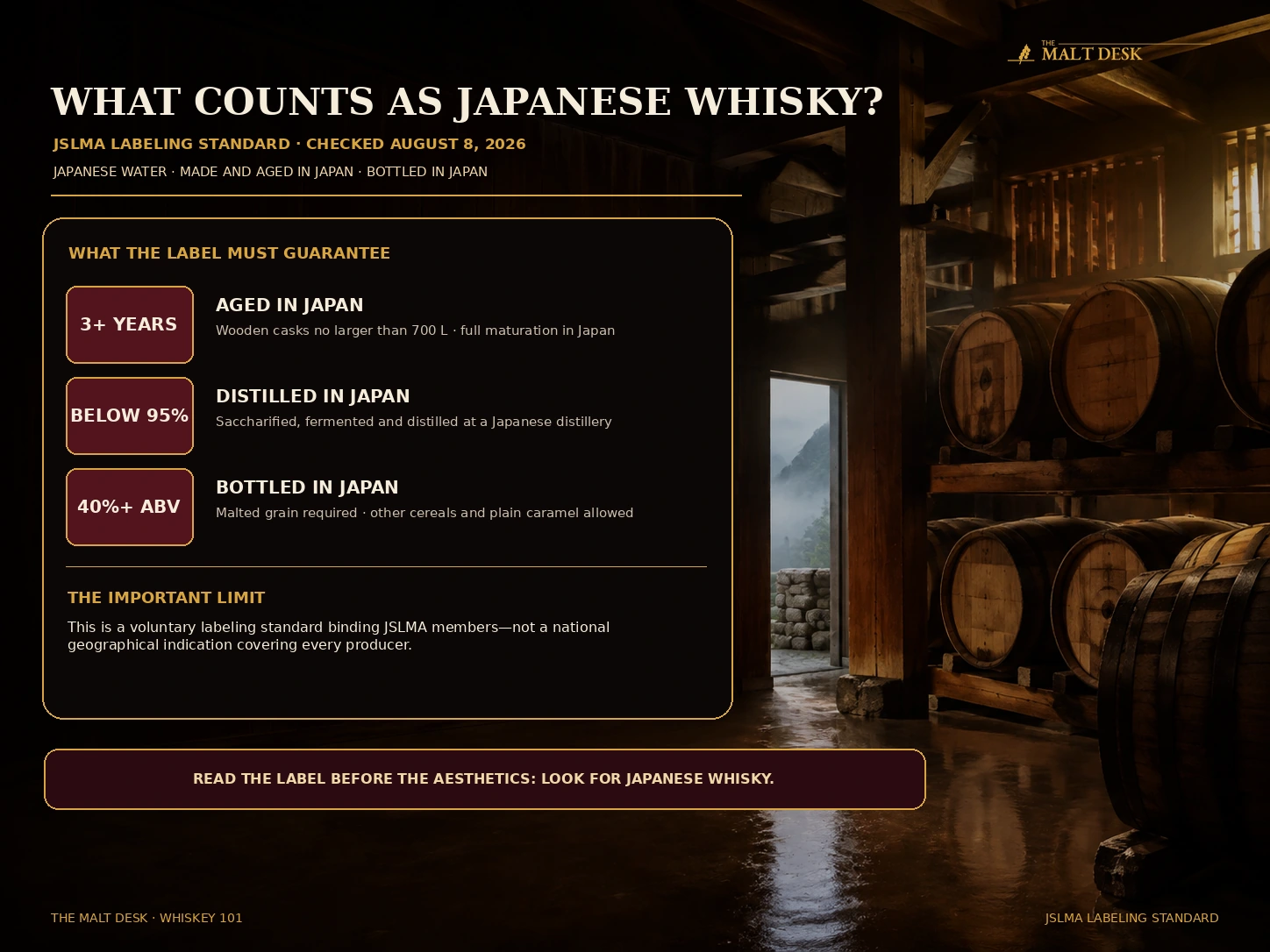
What Is Japanese Whisky? Origin Standards, Labels and Production Styles

September 8, 2026August 20, 2026 by K. Choi
JSLMA Japanese whisky labeling standard covering aging, distillation and bottling requirements in Japan

Japanese whisky explained through JSLMA origin standards, the 2024 transition, malt and grain categories, label checks and product-specific provenance.
Categories Whiskey 101 Tags blended Japanese whisky, Japanese Single Malt, Japanese whisky, JSLMA, Whisky for Beginners, Whisky Labels Leave a comment

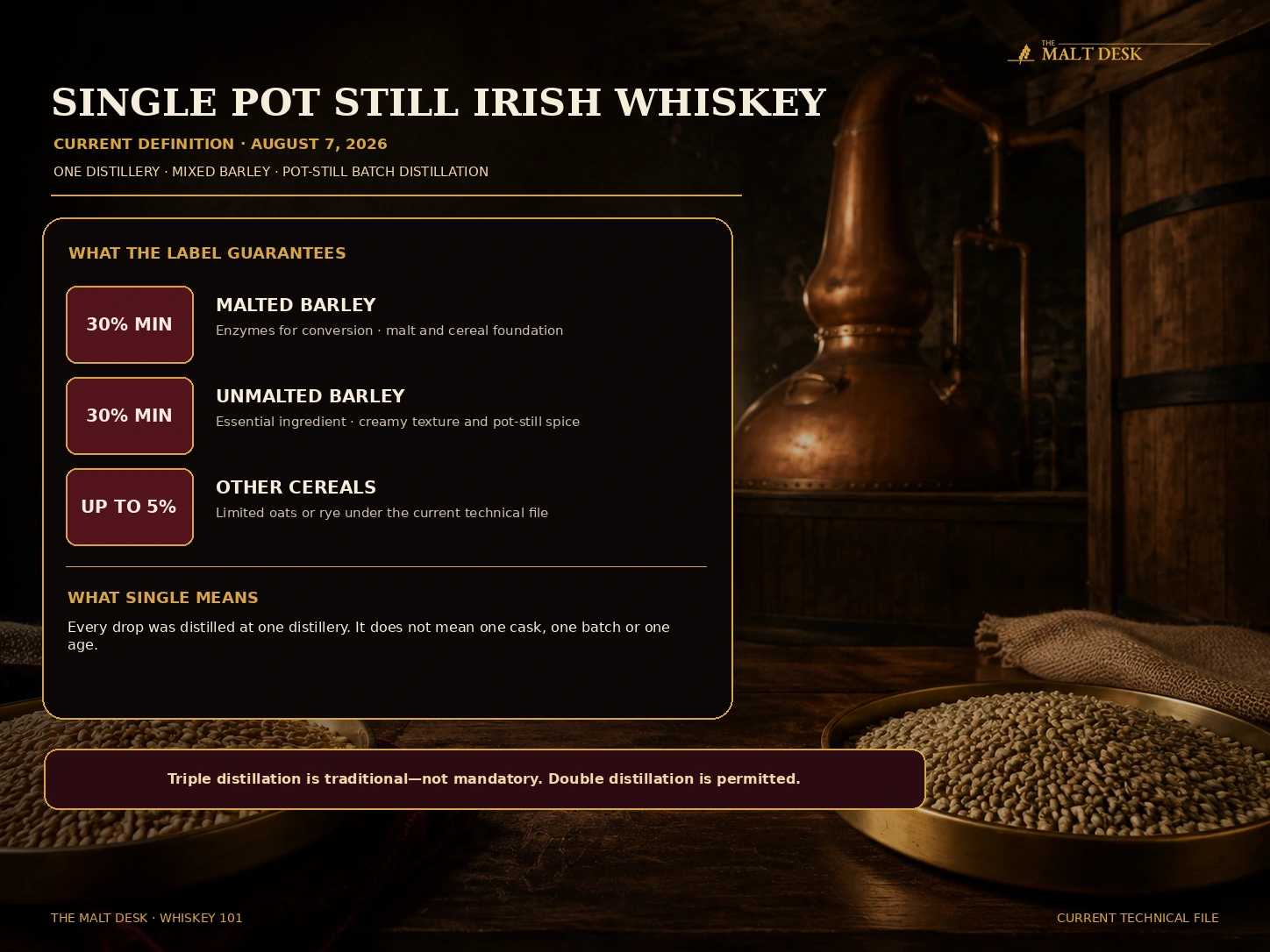
Single Pot Still Irish Whiskey Explained: Rules, Flavor and Bottles

September 9, 2026August 17, 2026 by K. Choi
Single pot still Irish whiskey definition with malted and unmalted barley requirements and pot still distillation

Understand single pot still Irish whiskey: malted and unmalted barley, pot still production, label terminology and the distinction from single malt and blends.
Categories Whiskey 101 Tags Green Spot, Irish Whiskey, Jameson, Redbreast 12, Single Pot Still Irish Whiskey, Whiskey for Beginners, Whiskey Production Leave a comment

Whiskey Flavor Maps Explained: Aroma Families and Their Limits

September 9, 2026August 15, 2026 by K. Choi
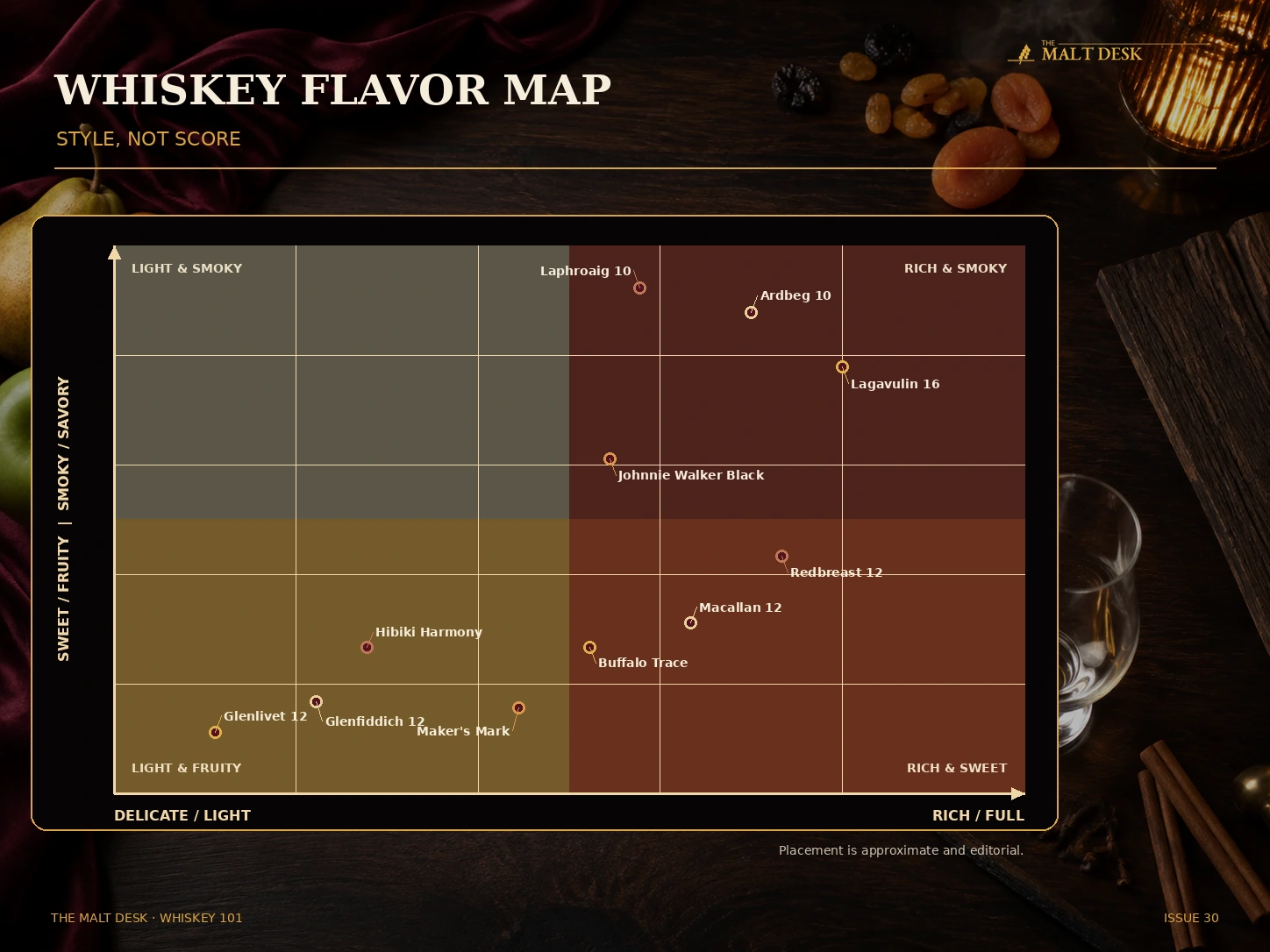
Whiskey flavor map positioning popular bottles from delicate and fruity to rich, sweet and smoky

Learn how whiskey flavor maps and wheels organize aroma descriptions, how to read their axes, and why style positions are different from quality scores.
Categories Whiskey 101 Tags Bourbon, peated whisky, Scotch Whisky, Whiskey Flavor Map, Whiskey for Beginners, Whiskey Tasting Leave a comment

What Is Peated Whisky? Smoke, PPM and Flavor Explained

September 9, 2026August 12, 2026 by K. Choi
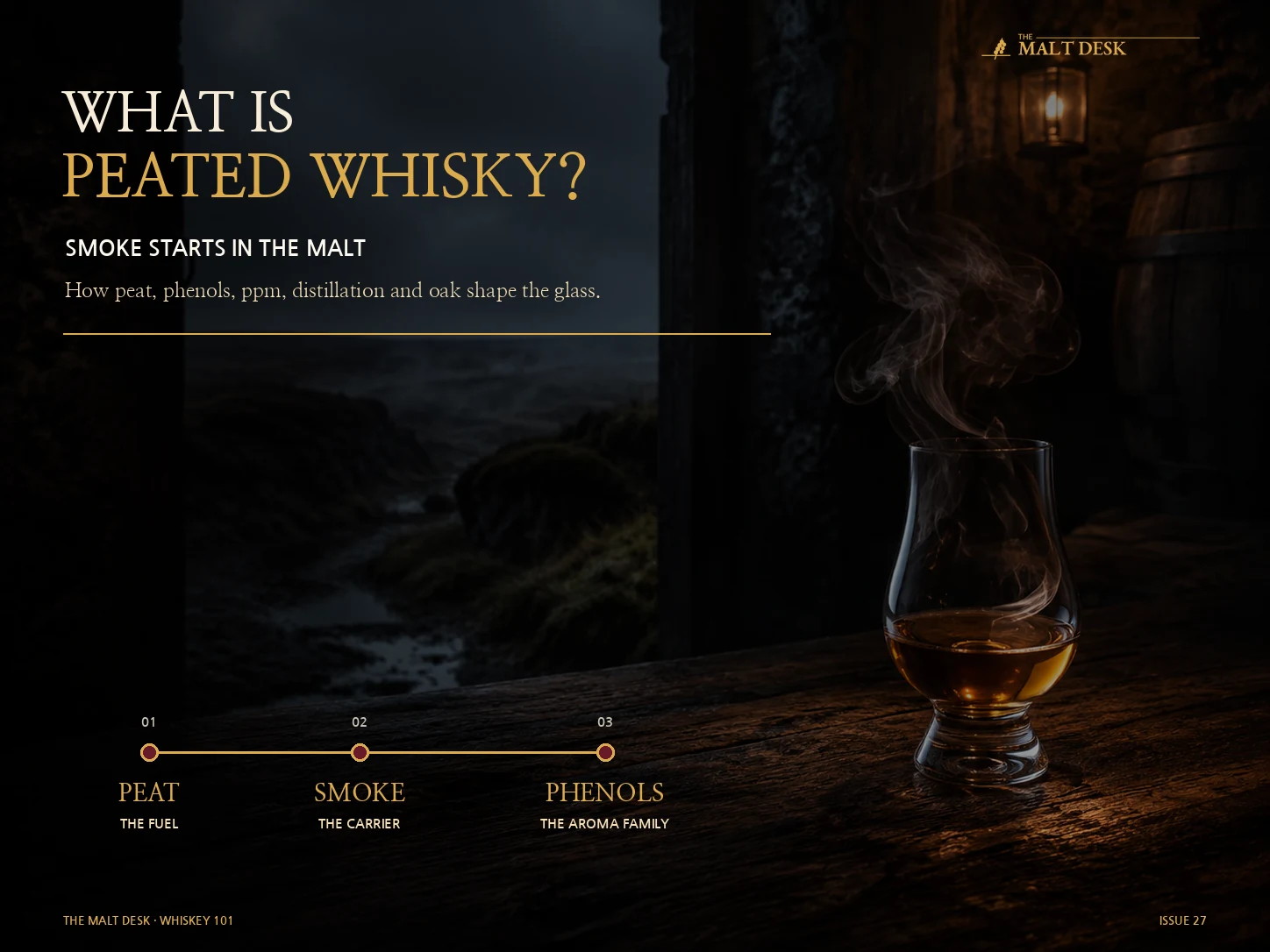
Peated whisky explained through peat, smoke and phenols beside a smoky whisky glass on the Islay coast

How peat smoke enters whisky during malt drying, what phenols and ppm describe, and why peat intensity, Islay origin and flavor preference are different questions.
Categories Whiskey 101 Tags Islay whisky, Peat Smoke, peated whisky, PPM, Scotch Whisky, Whiskey for Beginners Leave a comment

Single Malt vs Blended Scotch: Which Is Better?

September 8, 2026August 9, 2026 by K. Choi
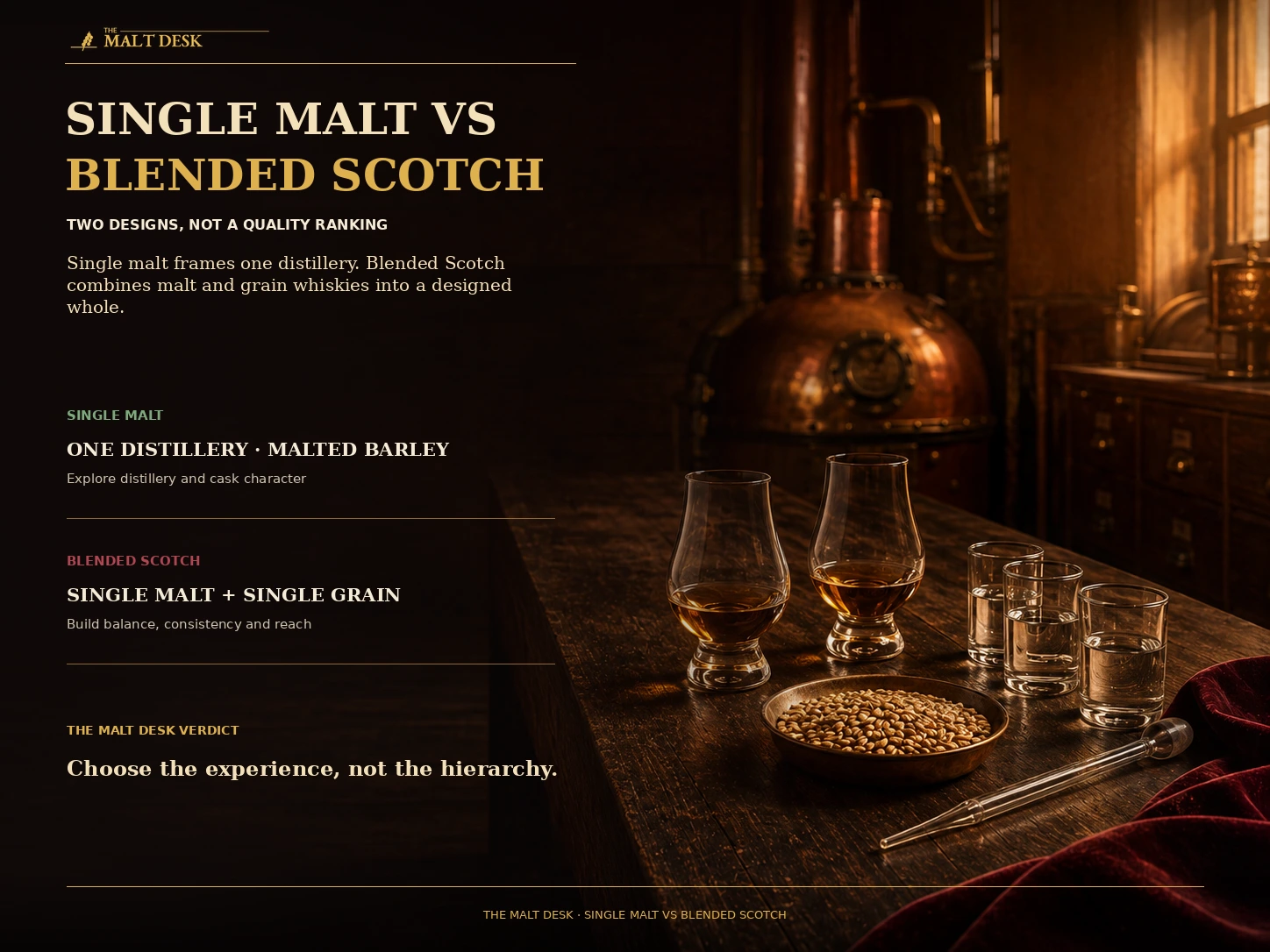
Single malt and blended Scotch compared by production structure and intended drinking experience

The production differences between single malt, blended Scotch and blended malt, including distillery origin, grain components, age statements and label terminology.

Categories Whiskey 101 Tags Blended Scotch, Scotch Guide, Scotch Whisky, Single Malt Scotch, Whisky for Beginners, Whisky Types Leave a comment

How to Drink Whiskey: Neat, Water, Ice or Highball?

September 8, 2026August 6, 2026 by K. Choi
How to drink whiskey neat, with water, on the rocks or in a highball

Neat, water, ice and highballs explained through concentration, temperature and carbonation, with practical dilution calculations and the limits of serving rules.
Categories Whiskey 101 Tags How to Drink Whiskey, Whiskey for Beginners, Whiskey Highball, Whiskey Neat, Whiskey on the Rocks, Whiskey with Water Leave a comment

Types of Whiskey Explained: Scotch, Bourbon, Irish, Tennessee & Japanese

September 8, 2026August 4, 2026 by K. Choi
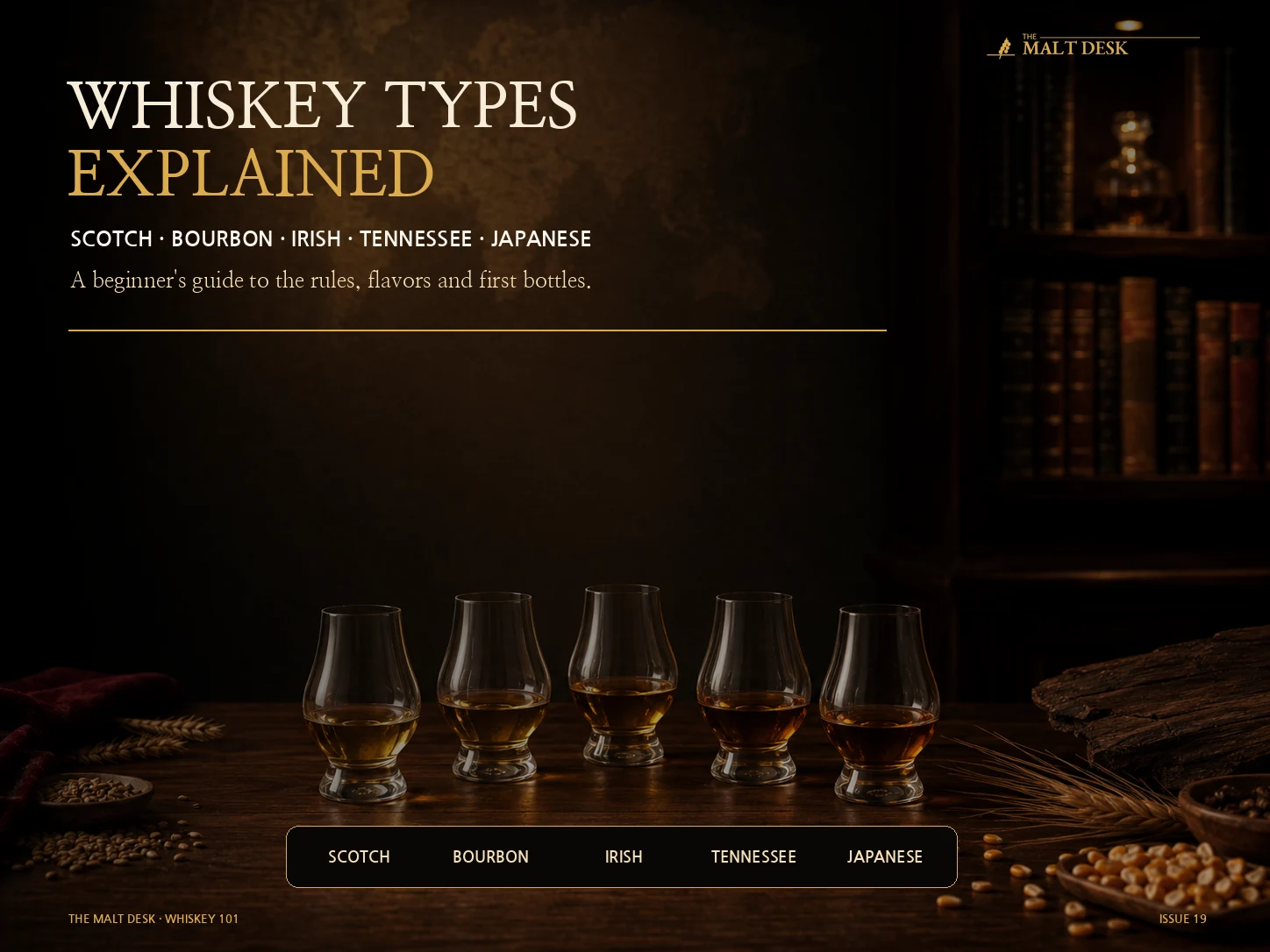
Five tasting glasses representing Scotch, bourbon, Irish, Tennessee and Japanese whiskey styles

Scotch, bourbon, Irish, Tennessee, Japanese, rye and Canadian whisky explained through origin, grains, maturation and labeling, with flavor generalizations kept separate.

Categories Whiskey 101 Tags Bourbon, Irish Whiskey, Japanese whisky, Scotch Whisky, Tennessee Whiskey, Types of Whiskey, Whiskey for Beginners Leave a comment

The Malt Desk is edited by K. Choi. Explore whisky production, label terms, product specifications and practical guides to glassware and storage. Flavor descriptions are attributed to their sources; these articles are informational guides, not personal tasting reports.

About · Contact · Privacy Policy · Affiliate Disclosure · Editorial Policy

© 2026 The Malt Desk by K. Choi • Built with GeneratePress
Manage Consent
To provide the best experiences, we use technologies like cookies to store and/or access device information. Consenting to these technologies will allow us to process data such as browsing behavior or unique IDs on this site. Not consenting or withdrawing consent, may adversely affect certain features and functions.
Functional Always active
The technical storage or access is strictly necessary for the legitimate purpose of enabling the use of a specific service explicitly requested by the subscriber or user, or for the sole purpose of carrying out the transmission of a communication over an electronic communications network.
Preferences
The technical storage or access is necessary for the legitimate purpose of storing preferences that are not requested by the subscriber or user.
Statistics
The technical storage or access that is used exclusively for statistical purposes. The technical storage or access that is used exclusively for anonymous statistical purposes. Without a subpoena, voluntary compliance on the part of your Internet Service Provider, or additional records from a third party, information stored or retrieved for this purpose alone cannot usually be used to identify you.
Marketing
The technical storage or access is required to create user profiles to send advertising, or to track the user on a website or across several websites for similar marketing purposes.
  • Manage options
  • Manage services
  • Manage {vendor_count} vendors
  • Read more about these purposes
View preferences
  • {title}
  • {title}
  • {title}