Laphroaig 10 Guide: Peated Malt, Market Strengths and Flavor Profile
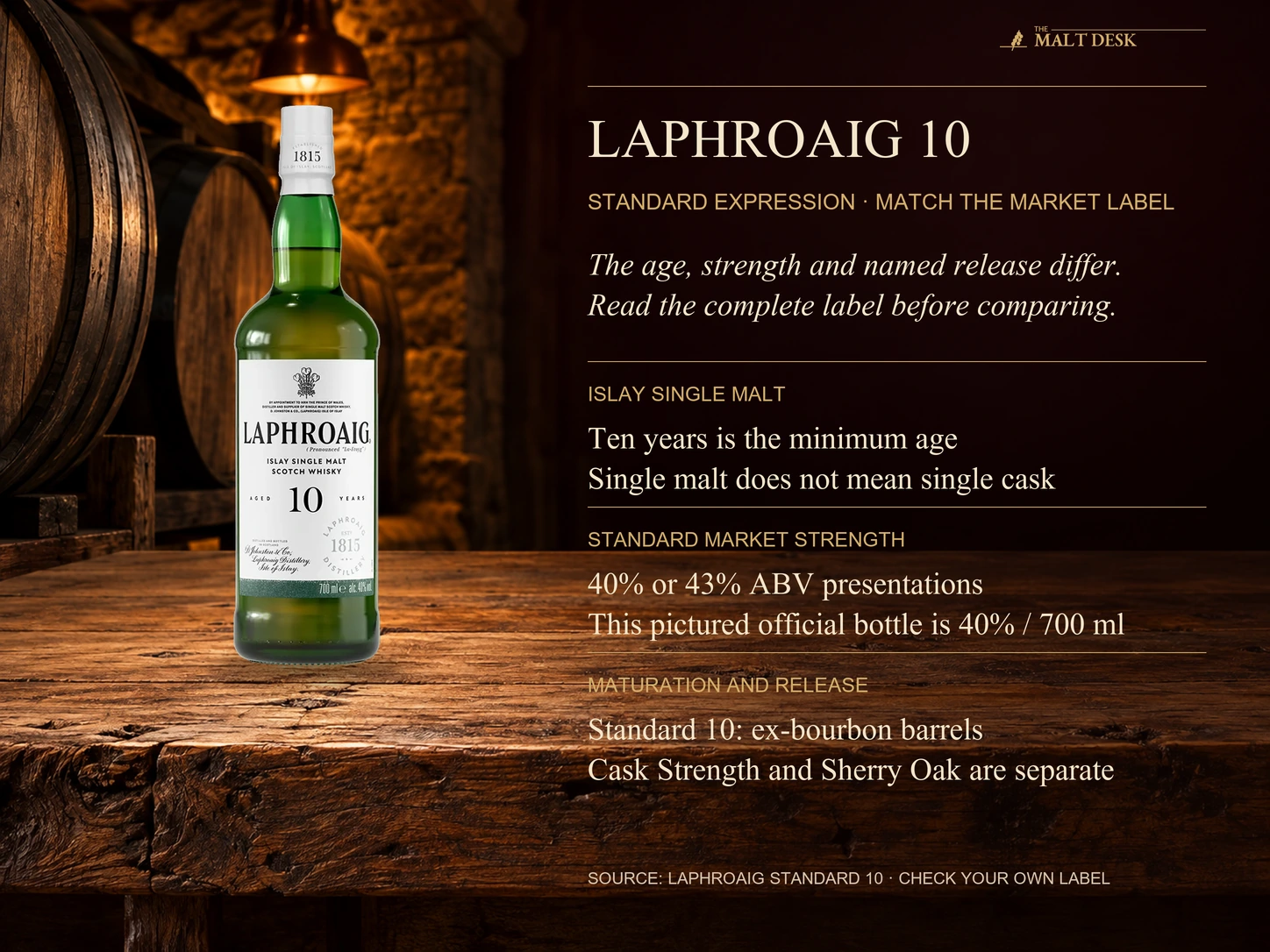
Laphroaig 10 explained: peated malt preparation, ex-bourbon maturation, 40% and 43% market presentations, and the producer’s medicinal and maritime flavor vocabulary.
Laphroaig 10 explained: peated malt preparation, ex-bourbon maturation, 40% and 43% market presentations, and the producer’s medicinal and maritime flavor vocabulary.
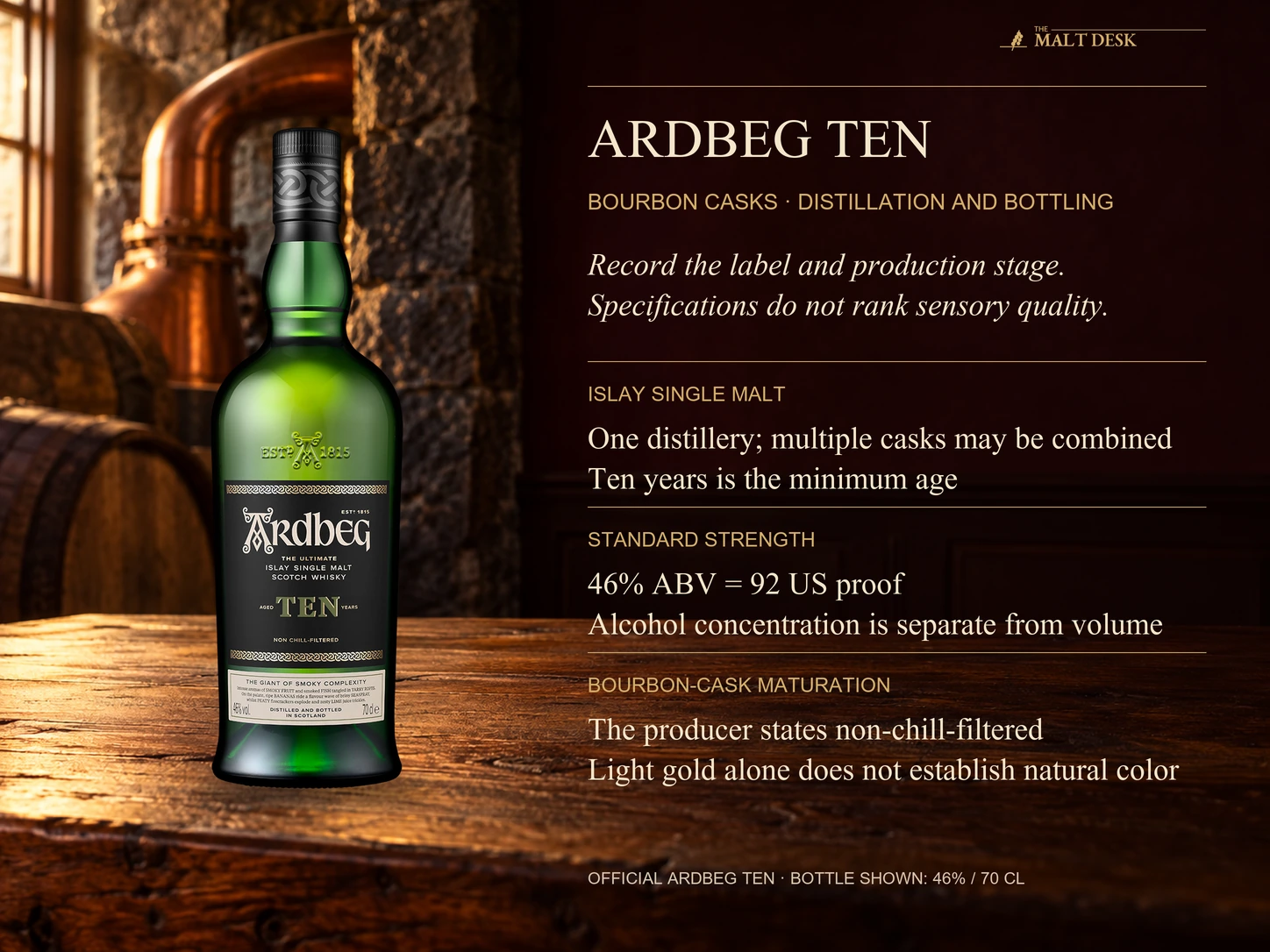
Ardbeg Ten explained: the spirit-still purifier, bourbon-cask maturation, 46% ABV, non-chill filtration and the producer’s citrus-and-smoke flavor profile.
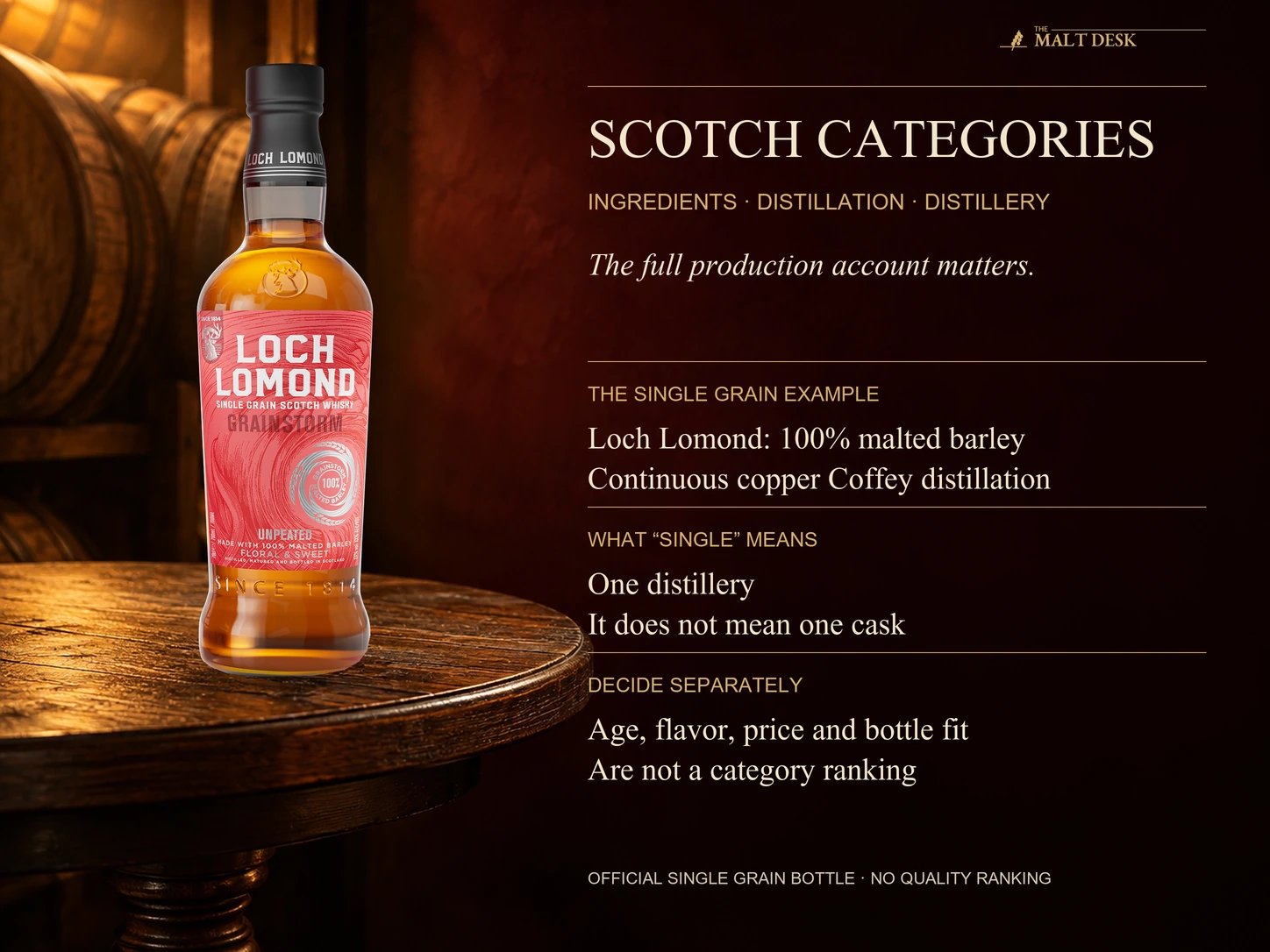
Distinguish single malt, blended malt and blended Scotch, separate one distillery from one cask, and read age statements as the youngest component.
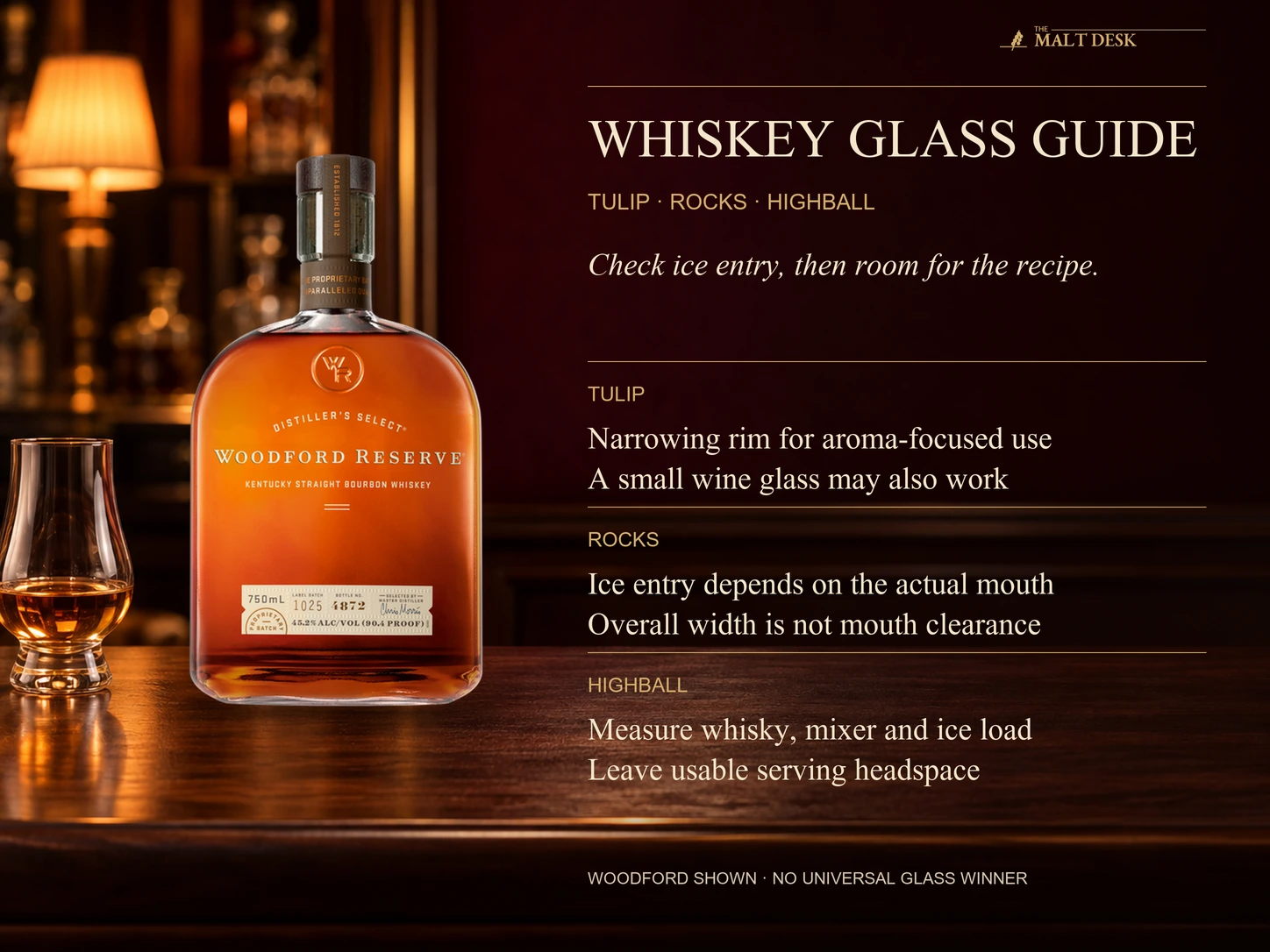
Compare tulip, rocks and highball glasses by function, opening and capacity, with a checked Glencairn model and an illustrative liquid-and-ice space calculation.
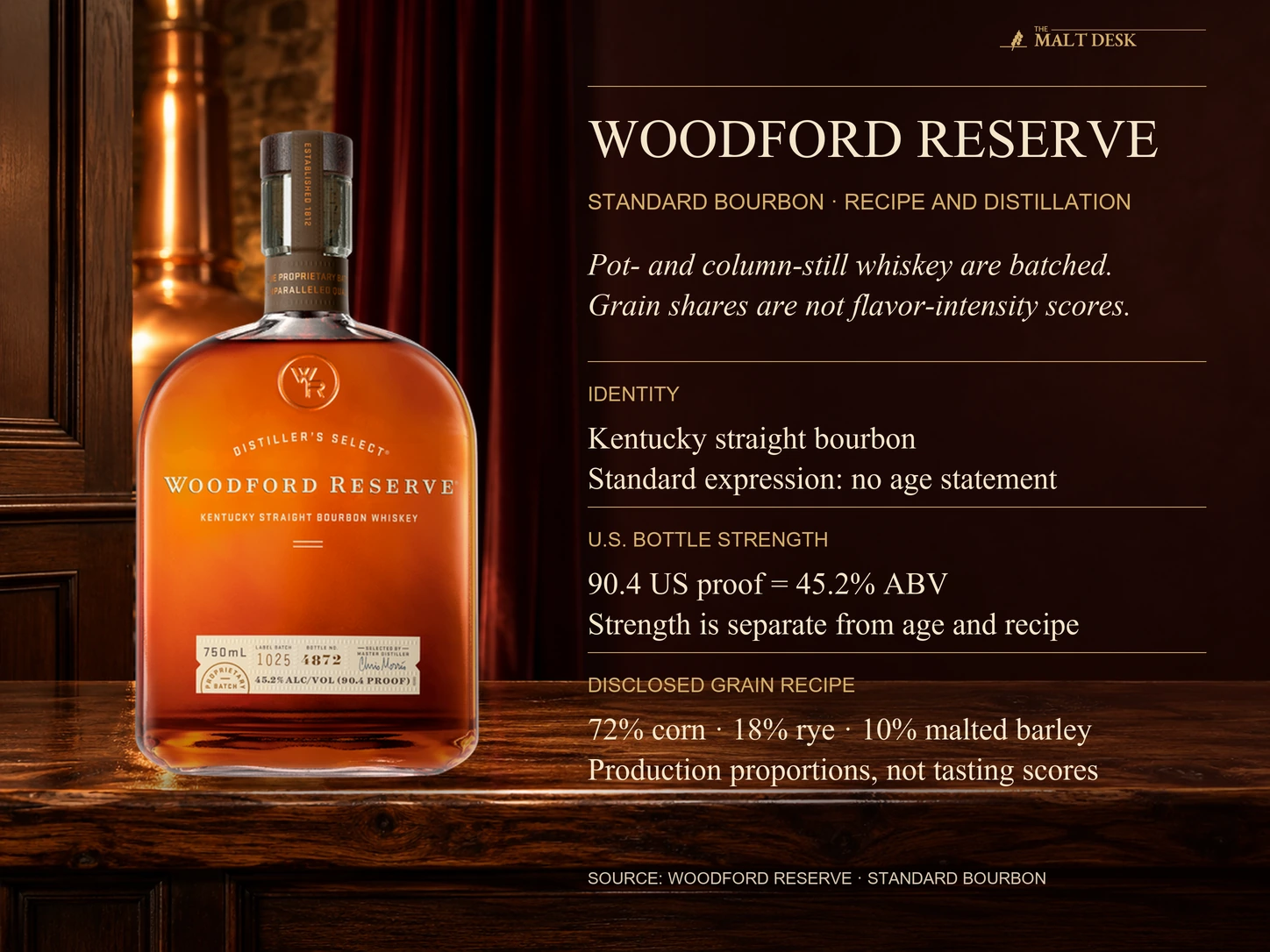
Woodford Reserve’s standard bourbon explained through its 72/18/10 grain recipe, pot- and column-still components, 90.4 proof and producer-described flavor profile.
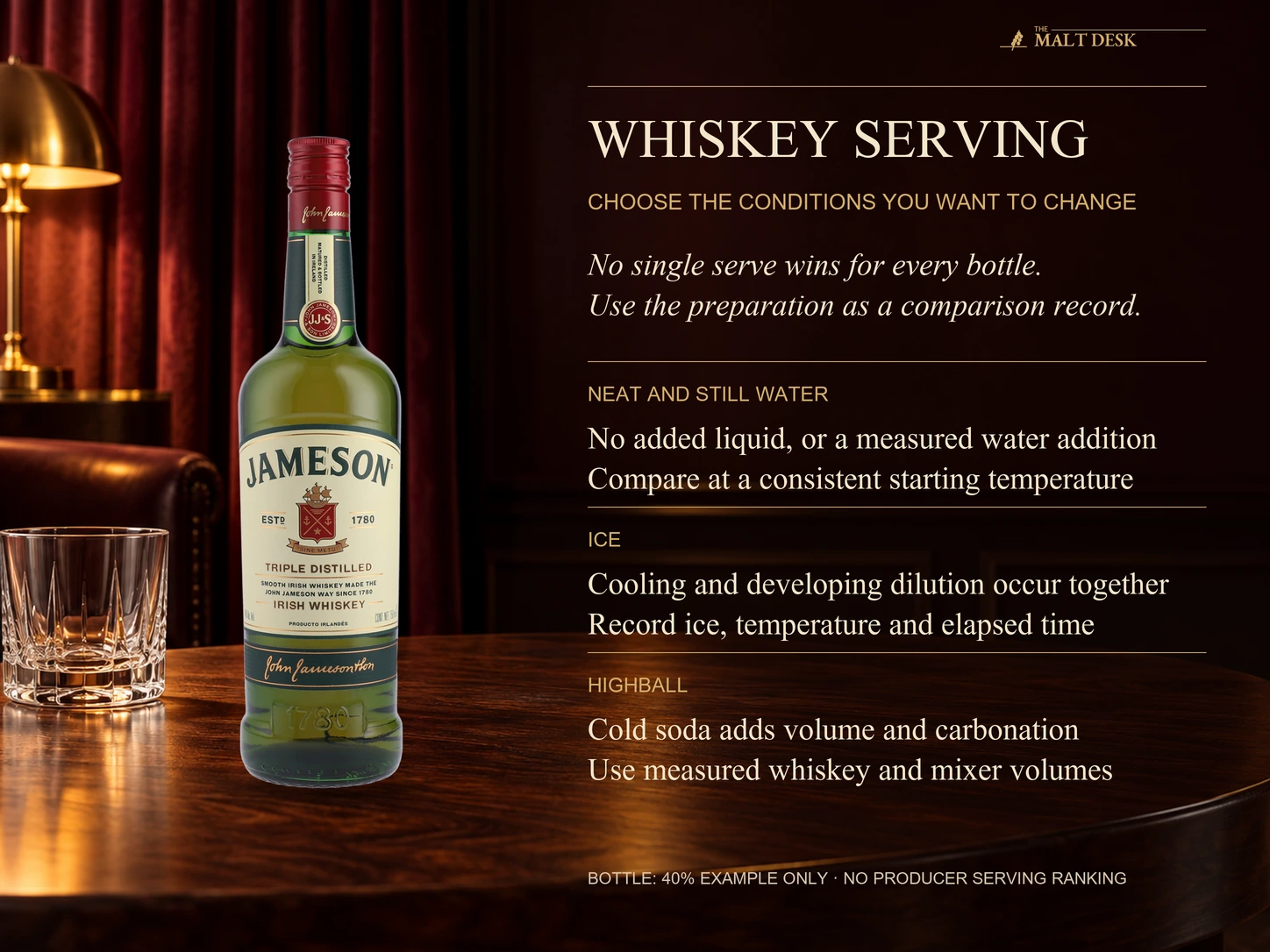
Compare neat whiskey, water, ice and highballs, and use the dilution calculator to estimate ABV, total volume and alcohol in a measured pour.
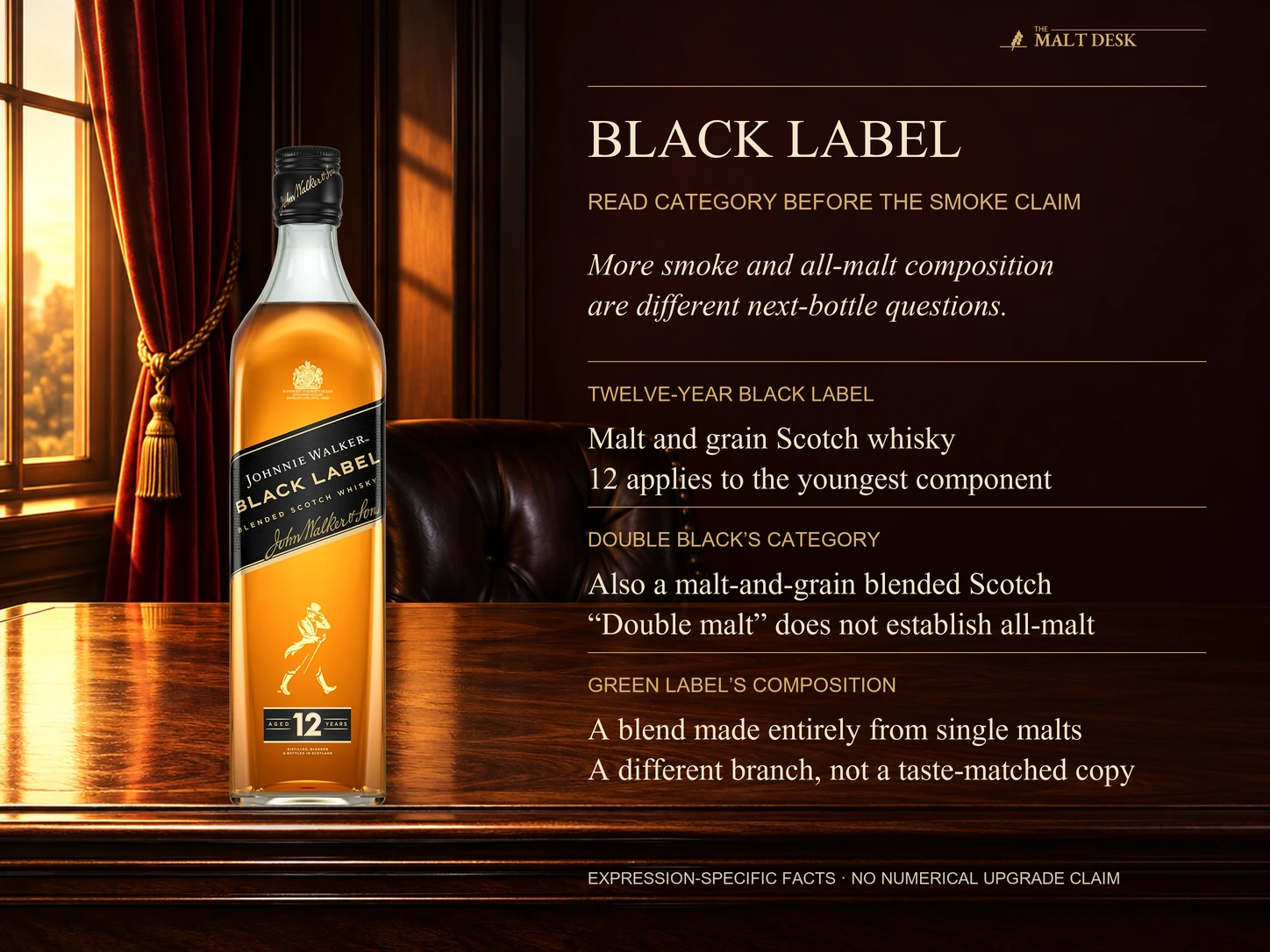
Johnnie Walker Black Label explained through its blended Scotch category, 12-year minimum age, 40% ABV and producer-described fruit, vanilla, spice and smoke.
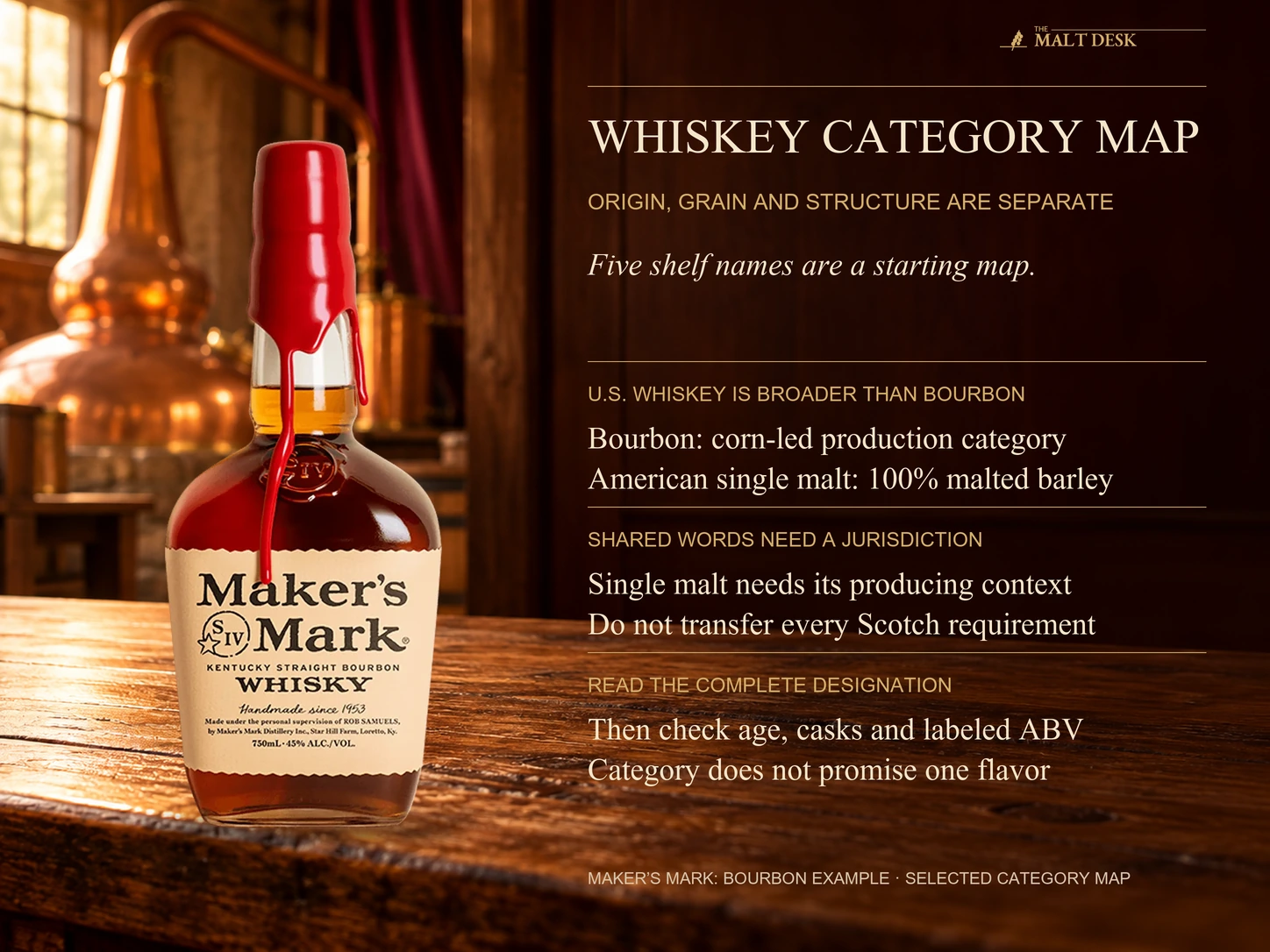
Read Scotch, bourbon, Irish, Tennessee and JSLMA Japanese whisky definitions, with rye and Canadian context and a clear distinction between rules and flavor.
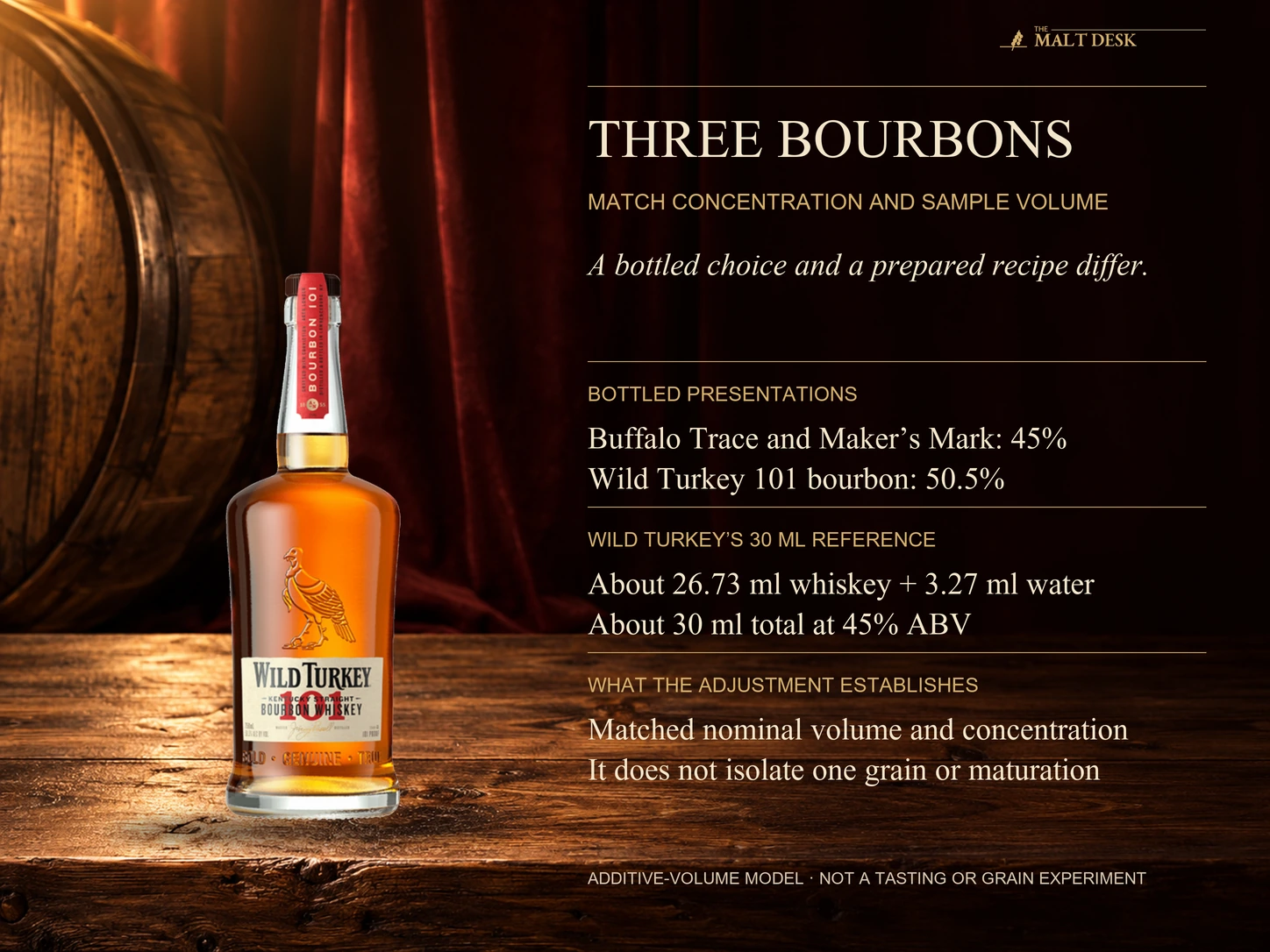
Compare Buffalo Trace, Maker’s Mark and Wild Turkey 101 through disclosed grain choices, 90 versus 101 proof, producer flavor descriptions and label differences.
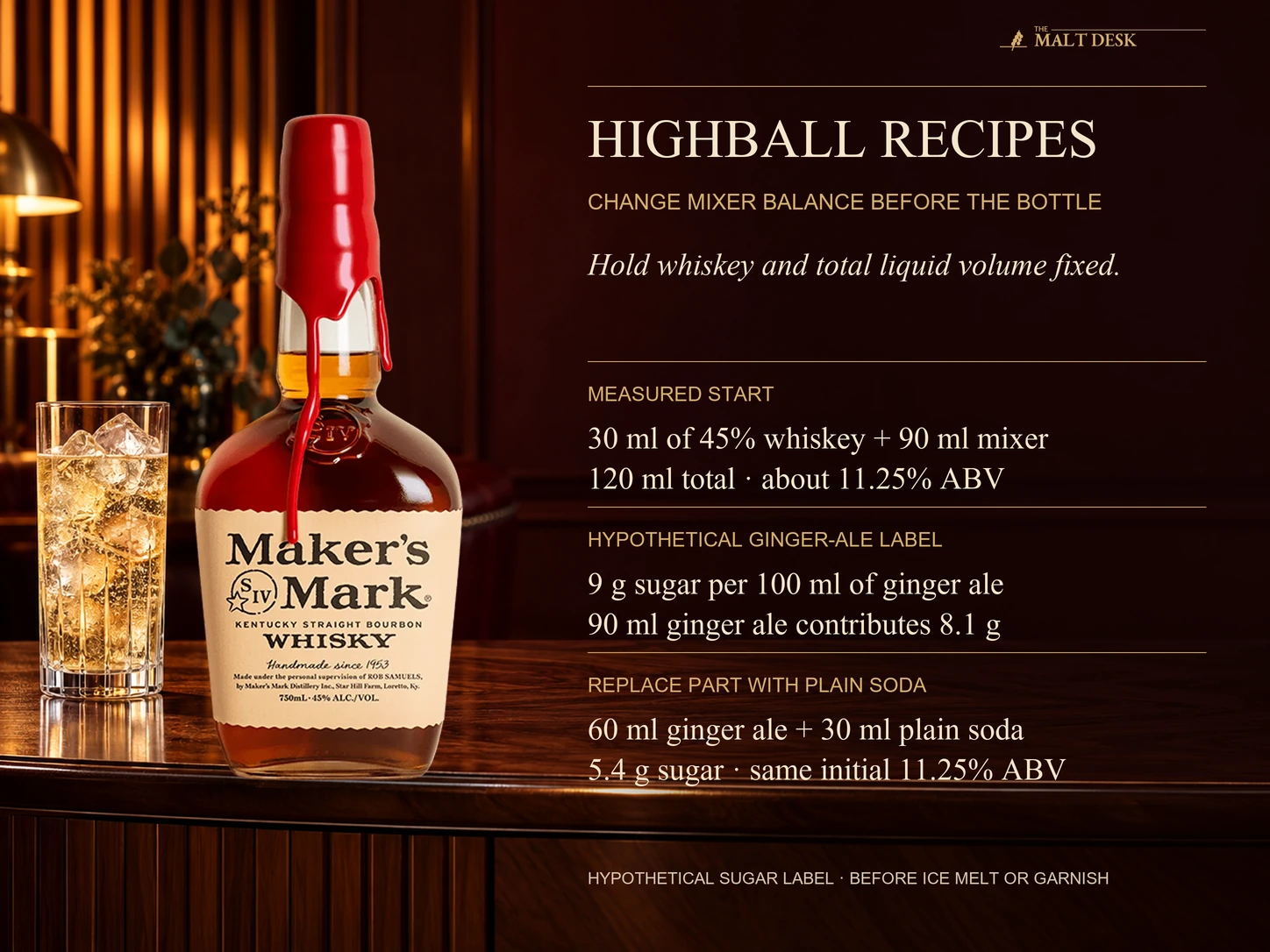
Learn how whiskey category, mixer and ratio shape a highball, with seven bottle examples and clear calculations for dilution and approximate finished ABV.