Skip to content

The Malt Desk by K. Choi

  • Whiskey Profiles
    • Tennessee Whiskey
    • Peated Whiskey
    • Japanese Whiskey
    • Irish Whiskey
    • Bourbon whiskey
    • Blended Scotch Whiskey
    • Single Malt Scotch
  • Whiskey Comparisons
  • Whiskey 101
  • Gear & Glassware
  • Explore Whiskey

K. Choi

K. Choi edits The Malt Desk, an independent whisky information site. Guides compare published product specifications, label terms and dated price records. Flavor descriptions are attributed to their sources; the articles do not claim firsthand tasting.

Hibiki Harmony vs Suntory Toki: Blend, Flavor Notes and Price Context
October 15, 2026August 21, 2026 by K. Choi
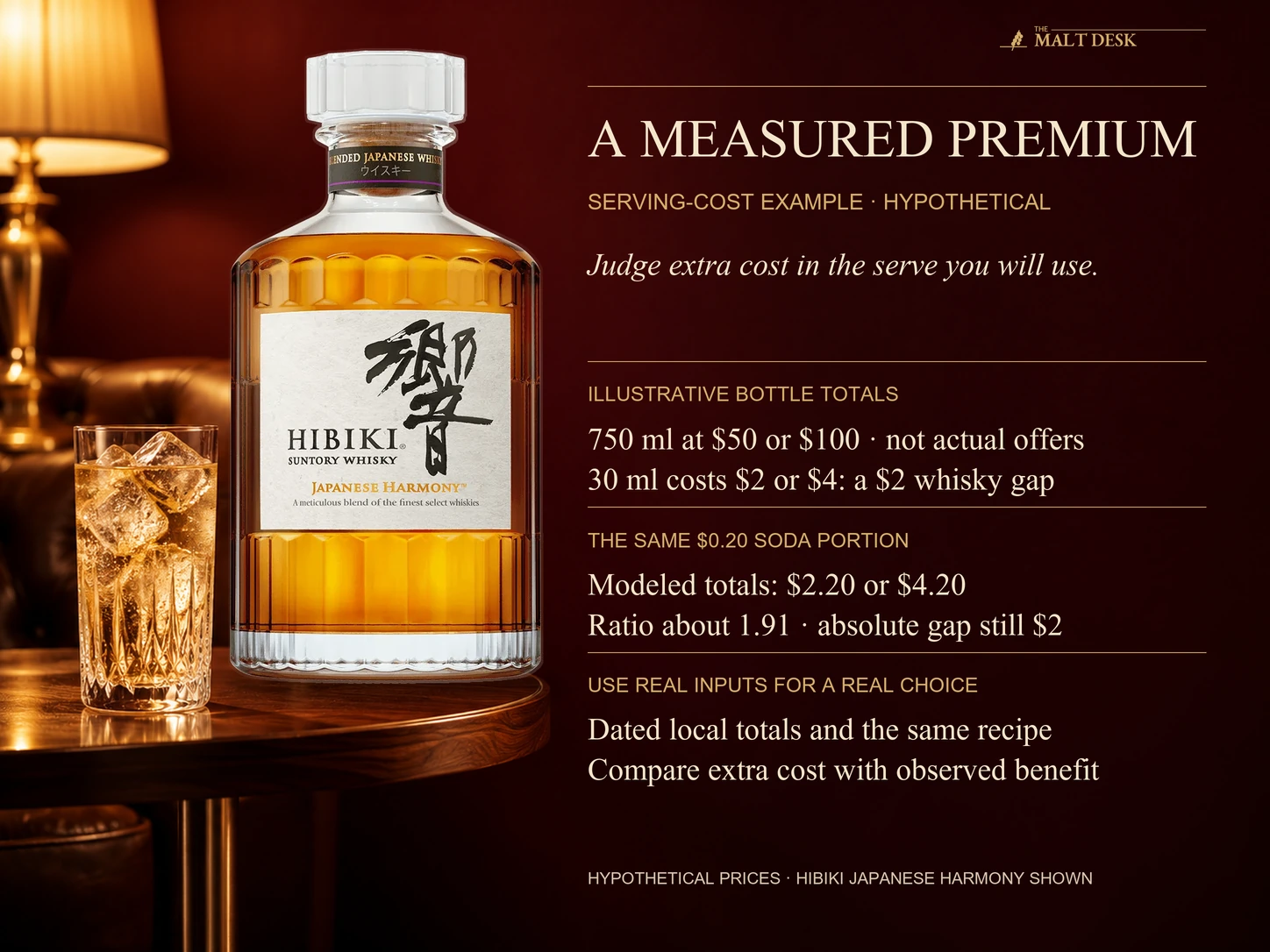
Official Hibiki Japanese Harmony bottle beside an explicitly hypothetical serving-cost example with no product-price assignment: equivalent seven-hundred-fifty-ml bottles costing fifty or one-hundred dollars contribute two or four dollars to a thirty-ml pour, and adding the same twenty-cent soda portion gives 2.20 or 4.20 dollars, about a 1.91 ratio while retaining a two-dollar absolute whisky-cost gap; a real choice needs actual dated offers and observed benefit in the same recipe

Compare Hibiki Japanese Harmony and Toki by disclosed blend information, 43% reference strength, producer descriptions and exact-expression local offer checks.

Categories Whiskey Comparisons

What Is Japanese Whisky? Origin Standards, Labels and Production Styles

October 15, 2026August 20, 2026 by K. Choi
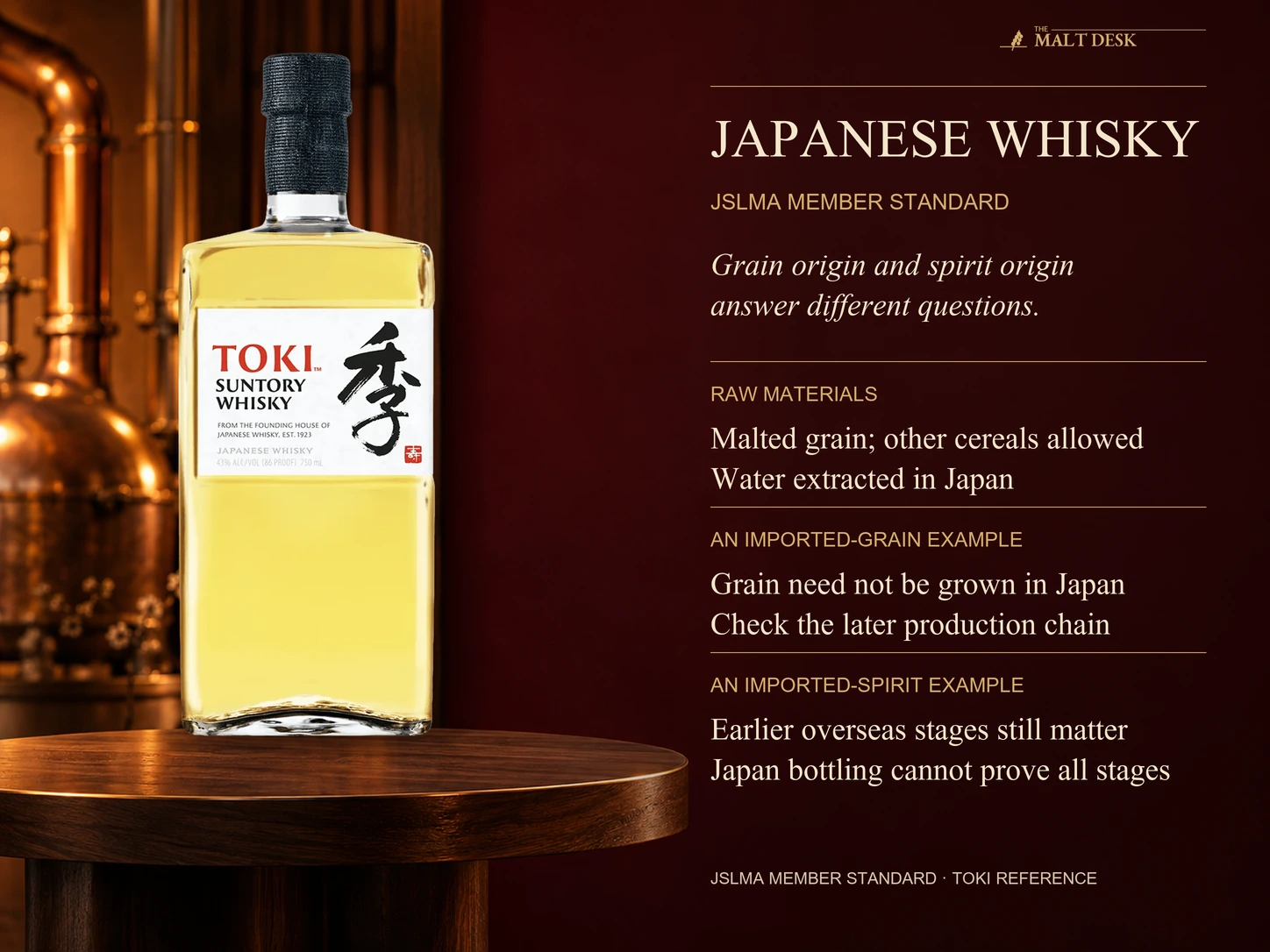
Official standard Toki bottle as a product-specific qualifying producer example for the JSLMA member standard: malted grain and Japanese water requirements do not require every cereal to be grown in Japan, and an illustrative foreign grain shipment differs from imported overseas distillate whose earlier production stages cannot be established by Japanese bottling alone

Trace Japanese whisky under the JSLMA member standard, from water and production to maturation and bottling, using Nikka’s disclosed product-status examples.
Categories Whiskey 101

Suntory Toki Guide: Blend, Japanese Whisky Status and Highball Preparation

October 15, 2026August 19, 2026 by K. Choi
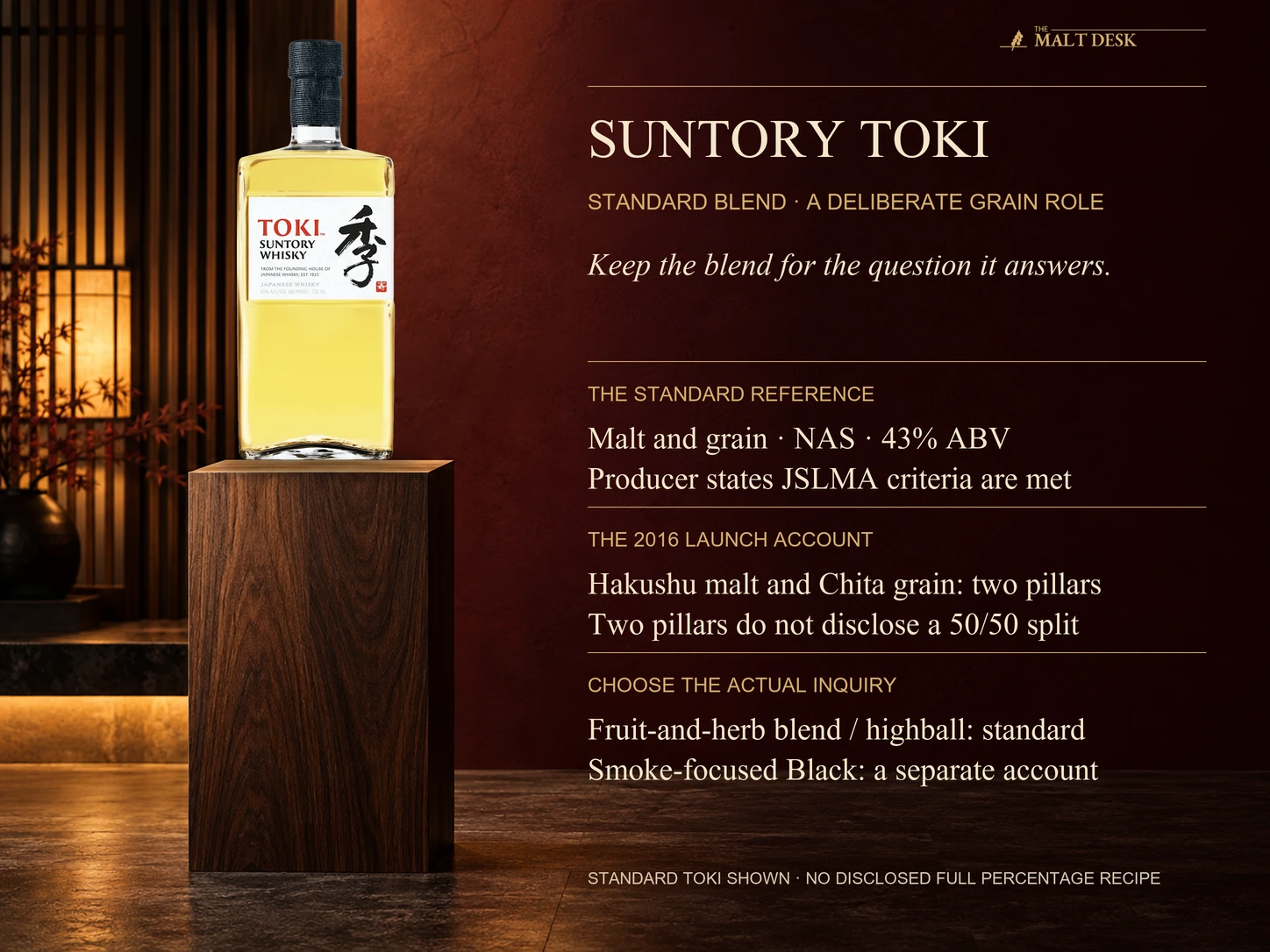
Official standard Suntory Toki 43-percent 750-ml bottle with its NAS malt-and-grain identity and product-specific JSLMA producer statement; the historical 2016 Hakushu-malt and Chita-grain two-pillar design does not disclose equal percentages, and Toki Black has a separate smoke-focused account

Understand Toki’s blending account and dated launch specification, keeping the actual market label separate from a local quote.
Categories Whiskey Profiles, Japanese Whiskey

Green Spot vs Redbreast 12: Age, Casks and Flavor Profiles

October 15, 2026August 18, 2026 by K. Choi
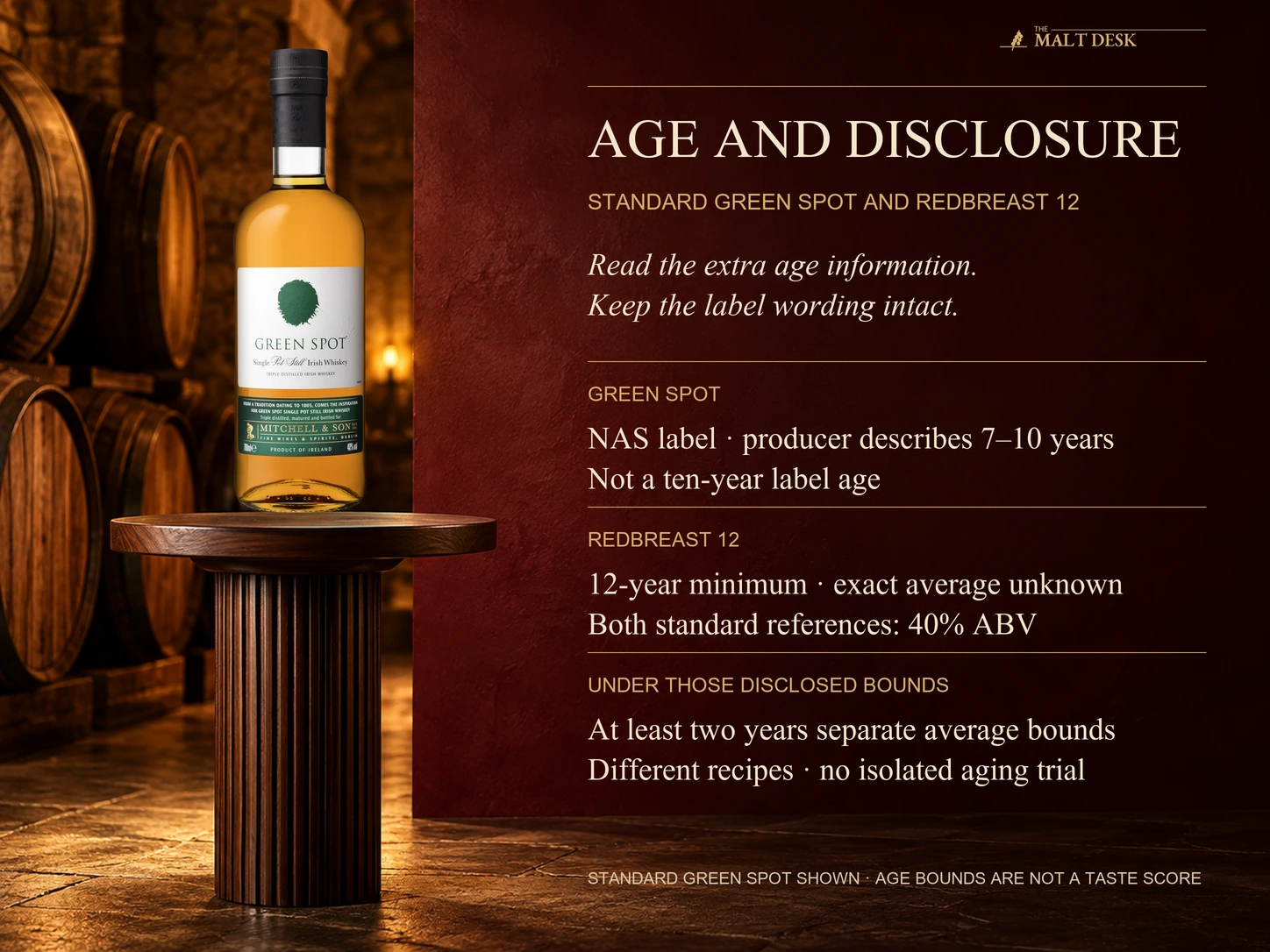
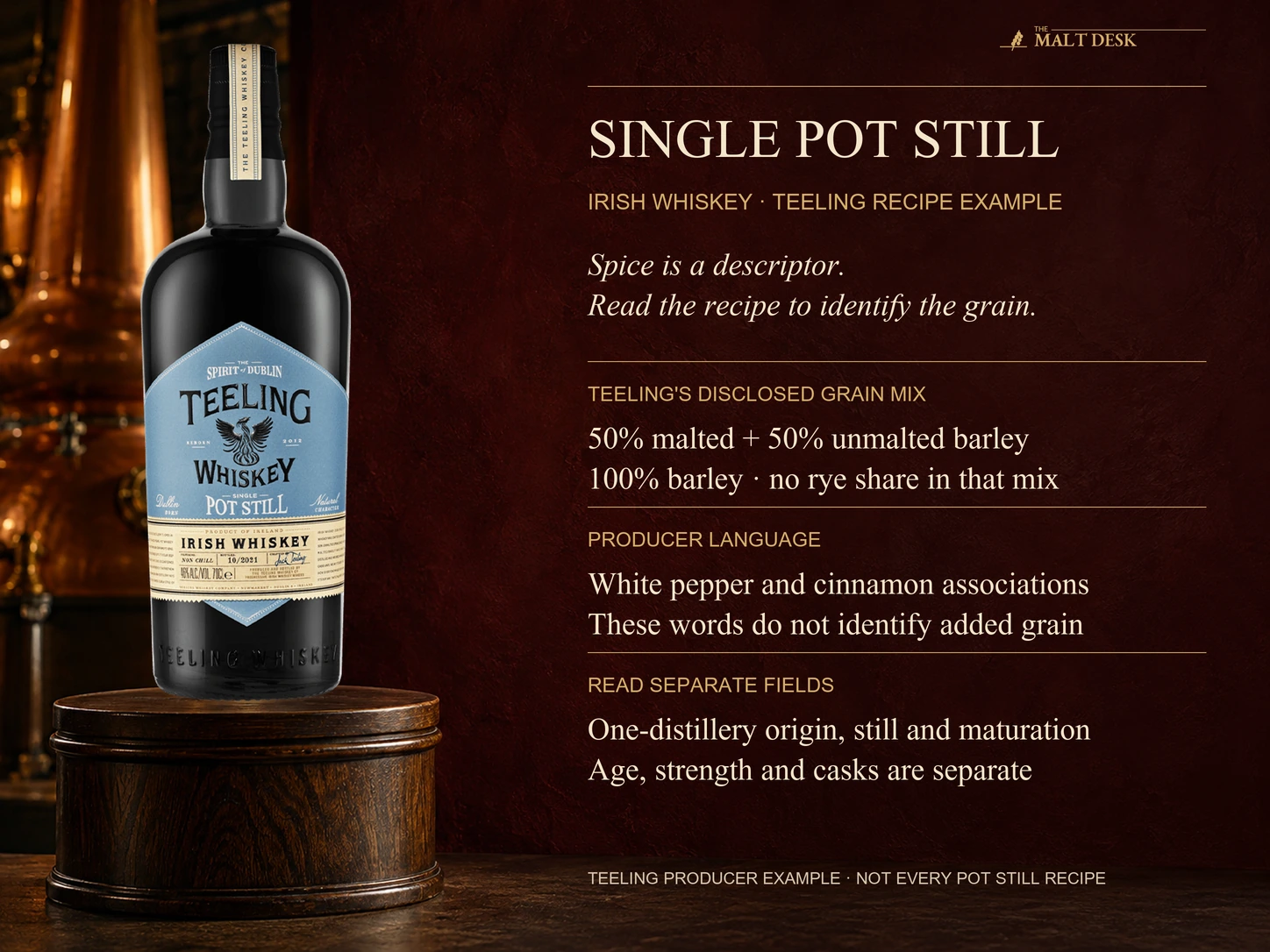
Official standard Green Spot bottle beside the standard-expression age comparison: Green Spot has no label age statement and a producer-described seven-to-ten-year component range, while Redbreast 12 has a twelve-year minimum; under those bounds their average ages are at least two years apart without revealing exact averages or proving a taste winner

Compare Green Spot and Redbreast 12 by age disclosure, pot still production, cask information and the flavor profiles described by their producers.
Categories Whiskey Comparisons

Single Pot Still Irish Whiskey Explained: Rules, Flavor and Bottles

October 15, 2026August 17, 2026 by K. Choi
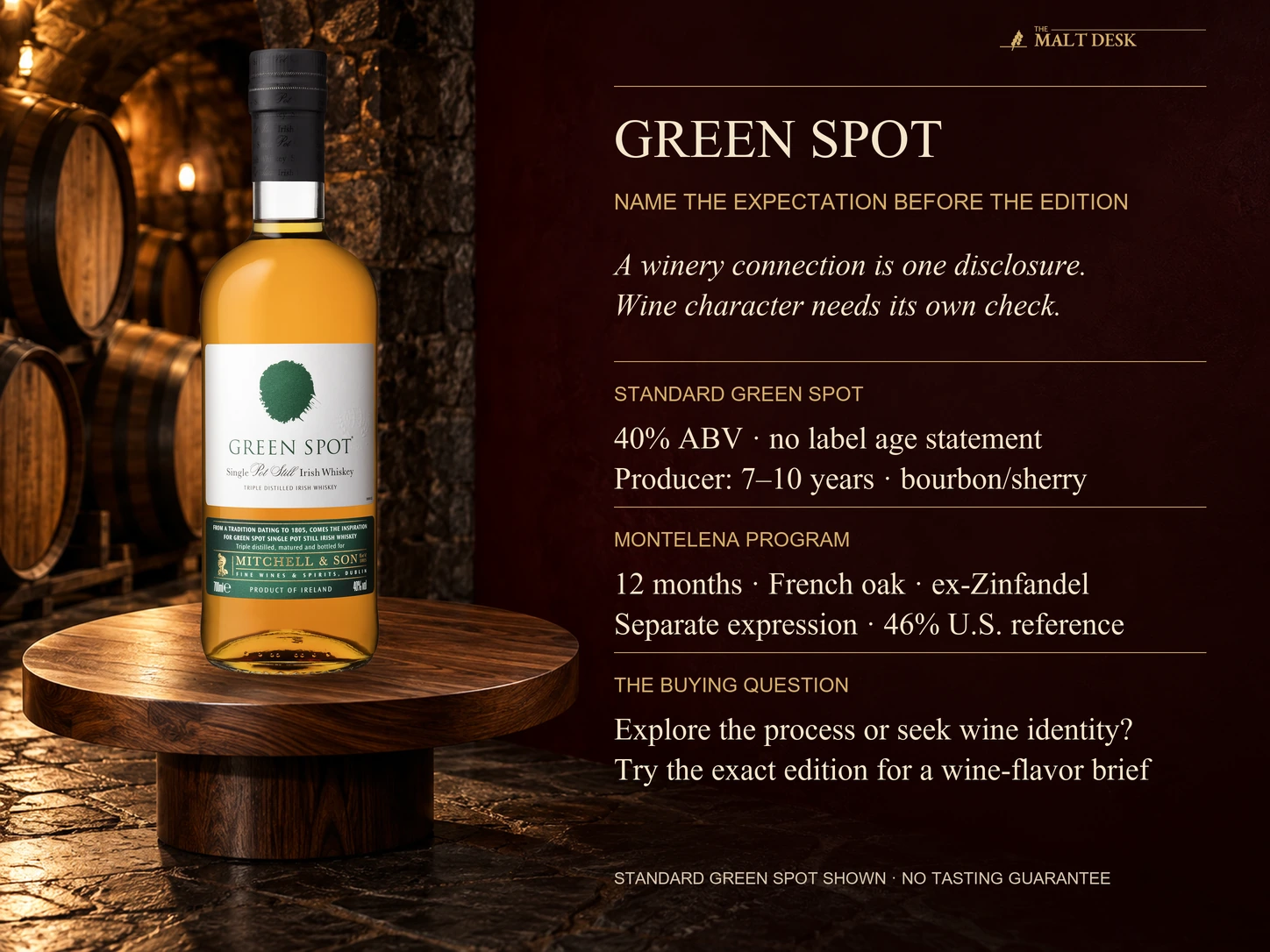
Official Teeling Single Pot Still bottle illustrating its producer-disclosed fifty-percent malted and fifty-percent unmalted barley grain mix, which leaves no rye share in that stated mix despite white-pepper and cinnamon descriptions; one-distillery origin, still method, maturation, age, strength and casks remain separate fields and the recipe is not assigned to every pot still whiskey

Understand the published Irish pot still grain limits, batch distillation and single-distillery meaning, keeping the 2026 consultation separate from requirements.
Categories Whiskey 101

Green Spot Irish Whiskey Guide: Production, Casks and Flavor Profile

October 15, 2026August 16, 2026 by K. Choi
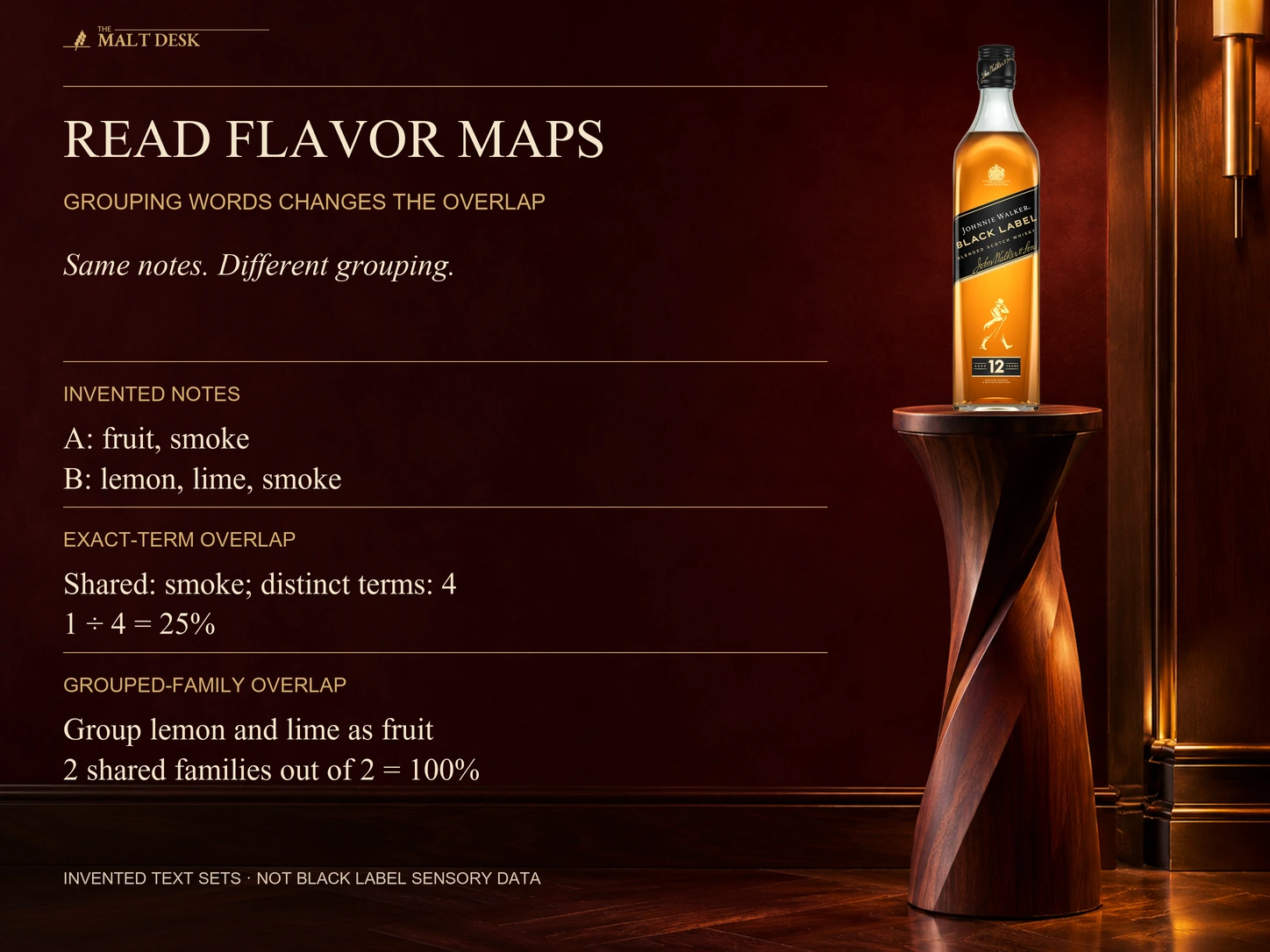
Official standard Green Spot bottle marked 40 percent and 700 ml as an identity reference beside its NAS label and producer seven-to-ten-year account, and the separate Montelena expression's twelve-month French-oak ex-Zinfandel finish at 46 percent; a disclosed winery connection does not guarantee a recognizable wine experience

Decode Green Spot’s single pot still category, NAS label and producer 7–10-year account, then record an exact local quote.
Categories Irish Whiskey, Whiskey Profiles

Whiskey Flavor Maps Explained: Aroma Families and Their Limits

October 15, 2026August 15, 2026 by K. Choi
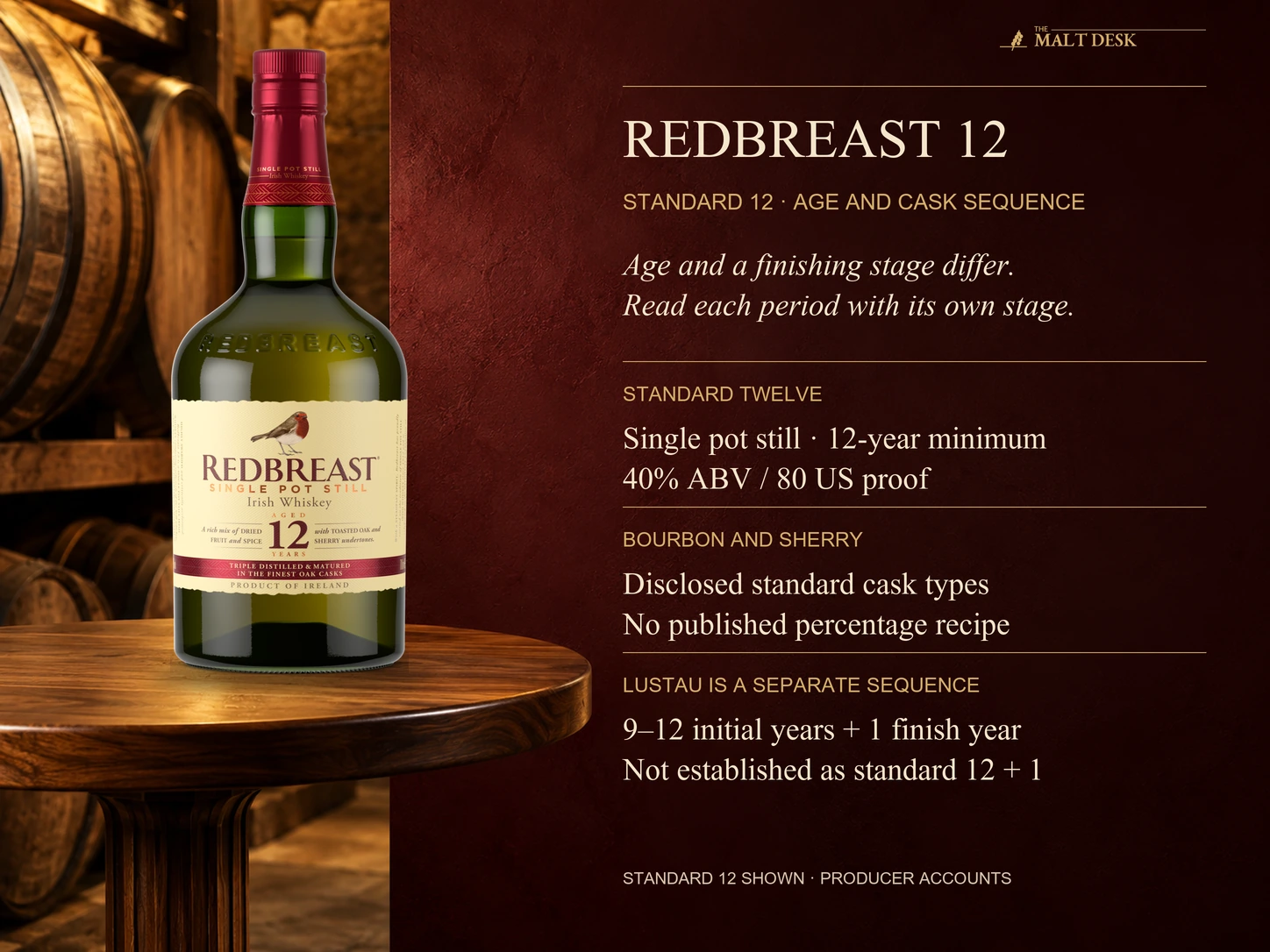
Official Johnnie Walker Black Label bottle is illustrative beside invented notes A with fruit and smoke and B with lemon lime and smoke: exact-term overlap is one shared term out of four, or 25 percent; grouping lemon and lime as fruit makes two shared families out of two, or 100 percent, without measuring bottle similarity or changing any observation

Learn how whiskey flavor maps and wheels organize aroma descriptions, how to read their axes, and why style positions are different from quality scores.
Categories Whiskey 101

Redbreast 12 Guide: Age, Pot Still Production and Cask Profile

October 15, 2026August 14, 2026 by K. Choi
Official standard Redbreast 12 bottle illustrating its twelve-year single-pot-still guarantee and 40-percent strength beside the separate published Lustau sequence of nine-to-twelve initial years and one finishing year; shared bourbon and sherry words do not establish standard 12 as Lustau's starting vatting

Redbreast 12 explained: Midleton production, the 12-year age statement, bourbon and sherry casks, producer tasting notes and the separate Cask Strength edition.
Categories Whiskey Profiles, Irish Whiskey

Ardbeg 10 vs Laphroaig 10 vs Lagavulin 16: Peat, Age and Production

October 15, 2026August 13, 2026 by K. Choi
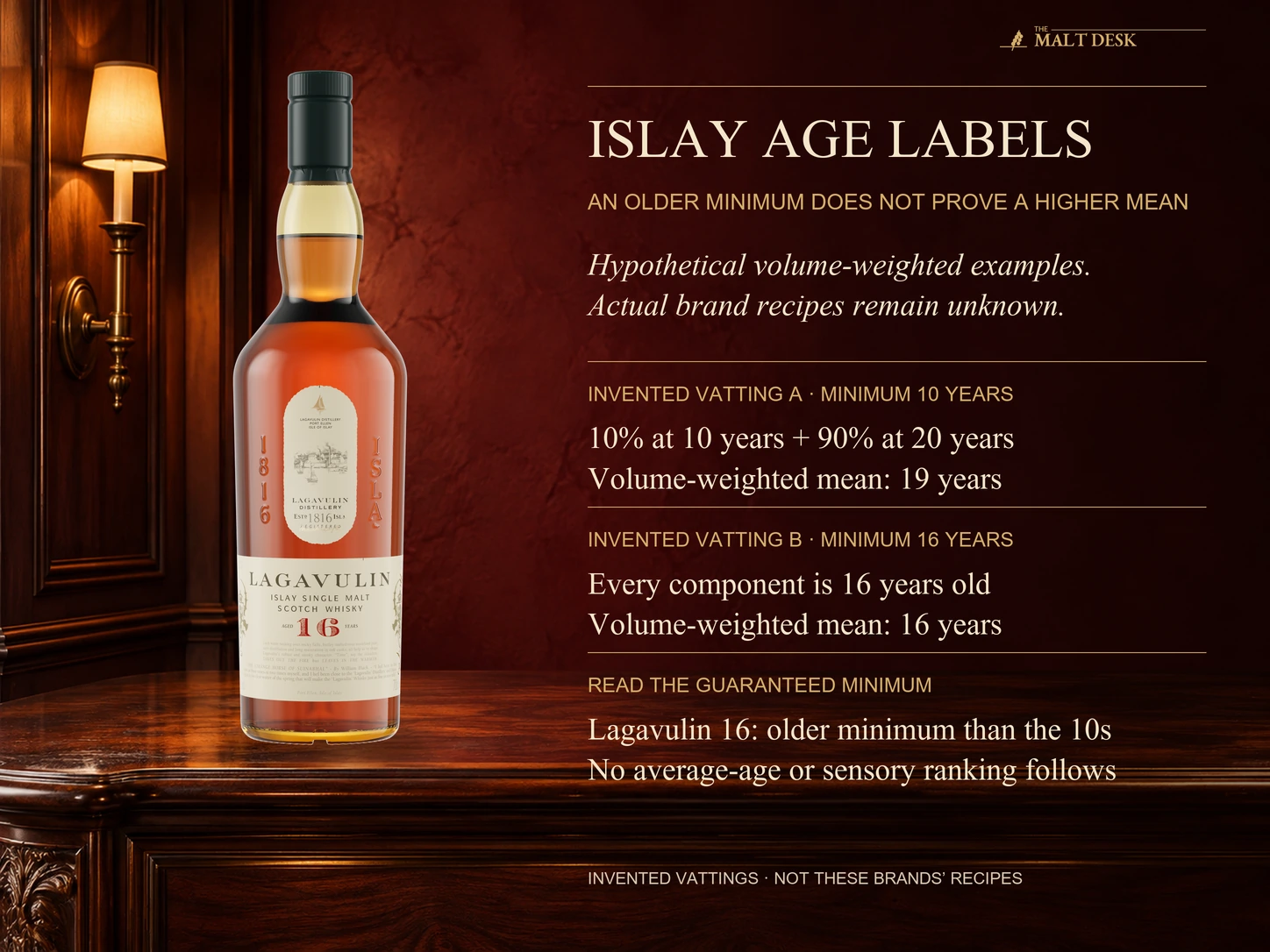
Official standard Lagavulin 16 bottle is illustrative beside two invented vattings rather than actual recipes: ten percent ten-year spirit and ninety percent twenty-year spirit has a ten-year youngest component and nineteen-year volume-weighted arithmetic mean, while all sixteen-year components have both a sixteen-year minimum and mean; Lagavulin 16 guarantees an older minimum than Ardbeg 10 and Laphroaig 10 without proving an older average or a sensory ranking

Compare three Islay single malts by age, bottling strength, cask disclosures and producer-described smoke profiles, with the limits of peat rankings explained.
Categories Whiskey Comparisons

What Is Peated Whisky? Smoke, PPM and Flavor Explained

October 15, 2026August 12, 2026 by K. Choi
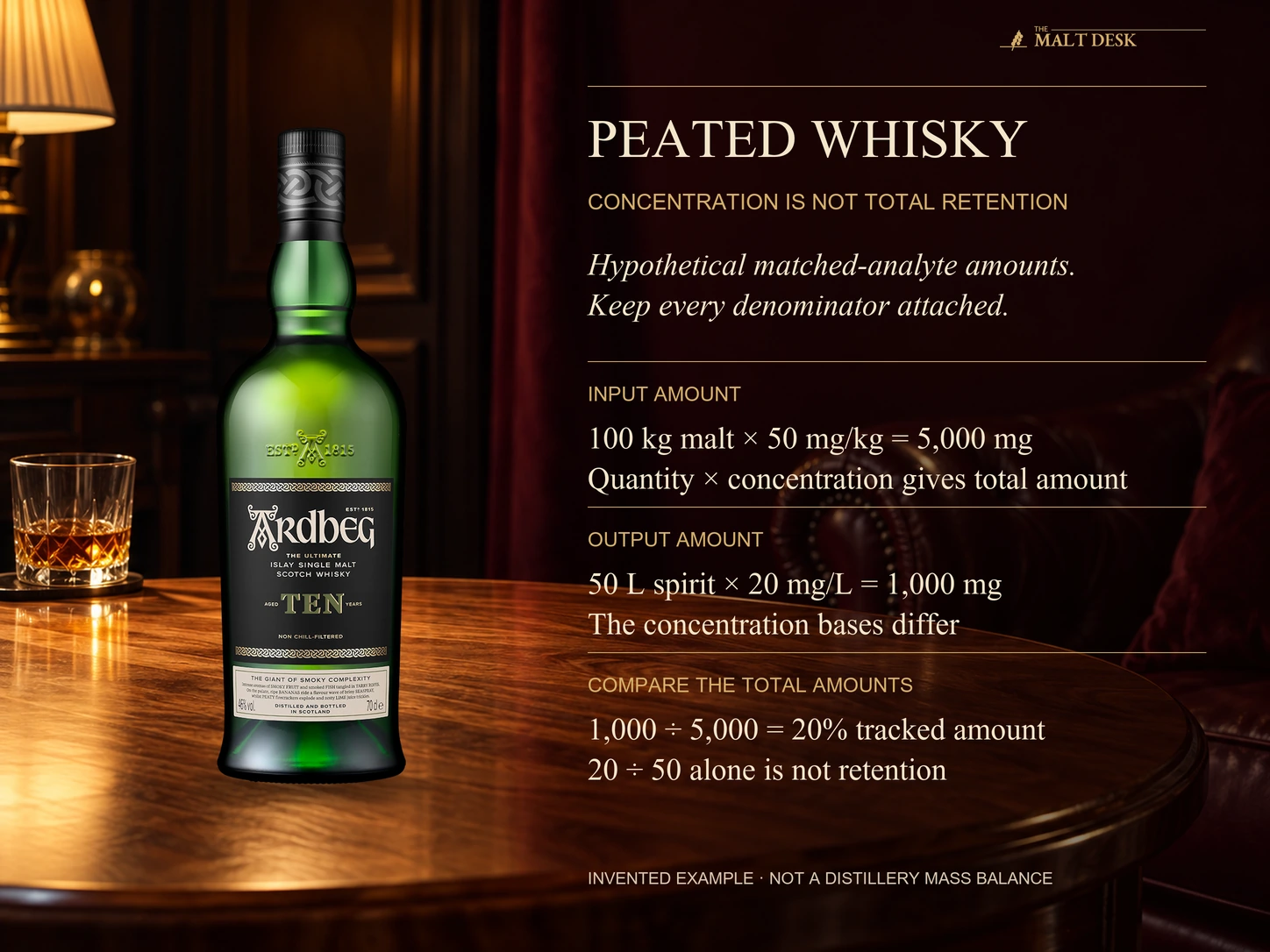
Official standard Ardbeg Ten bottle used only as an illustration beside the article’s hypothetical matched-analyte calculation: 100 kilograms malt at 50 milligrams per kilogram contains 5000 milligrams, 50 liters spirit at 20 milligrams per liter contains 1000 milligrams, and 1000 divided by 5000 is 20 percent tracked amount; dividing bare concentration numbers does not establish retention and this is not Ardbeg or Torabhaig production data

How peat smoke enters whisky during malt drying, what phenols and ppm describe, and why peat intensity, Islay origin and flavor preference are different questions.

Categories Whiskey 101
Older posts
Newer posts
← Previous Page1 … Page3 Page4 Page5 … Page7 Next →

The Malt Desk by K. Choi — whiskey profiles, comparisons and practical guides.

About · Contact · Privacy Policy · Affiliate Disclosure · Editorial Policy

© 2026 The Malt Desk by K. Choi • Built with GeneratePress
Cookie choices

Optional cookies support site statistics and saved preferences. Functional cookies remain active. Accept or reject optional cookies, or use View preferences to choose categories. You can change your choice later using Manage consent.

Functional Always active
The technical storage or access is strictly necessary for the legitimate purpose of enabling the use of a specific service explicitly requested by the subscriber or user, or for the sole purpose of carrying out the transmission of a communication over an electronic communications network.
Preferences
The technical storage or access is necessary for the legitimate purpose of storing preferences that are not requested by the subscriber or user.
Statistics
The technical storage or access that is used exclusively for statistical purposes. The technical storage or access that is used exclusively for anonymous statistical purposes. Without a subpoena, voluntary compliance on the part of your Internet Service Provider, or additional records from a third party, information stored or retrieved for this purpose alone cannot usually be used to identify you.
Marketing
The technical storage or access is required to create user profiles to send advertising, or to track the user on a website or across several websites for similar marketing purposes.
  • Manage options
  • Manage services
  • Manage {vendor_count} vendors
  • Read more about these purposes
View preferences
  • {title}
  • {title}
  • {title}